The Data Revolution: Current Topics in Statistics

The field of statistics is undergoing its most significant transformation in decades. From the shift toward “Causal Inference” to the rise of “Synthetic Data” and real-time “Edge Analytics,” discover how modern statisticians are turning the noise of Big Data into the signal of truth on WebRef.org.

Welcome back to the WebRef.org blog. We have decoded the power structures of political science and the massive engines of macroeconomics. Today, we look at the mathematical “glue” that holds all these disciplines together: Statistics.

In 2025, statistics is no longer just about calculating averages or drawing pie charts. It has become a high-stakes, computational science focused on high-dimensional data, automated decision-making, and the ethical pursuit of privacy. Here are the defining topics in the field today.


1. Causal Inference: Moving Beyond Correlation

The old mantra “correlation does not imply causation” is finally getting a formal solution. Causal Inference is now a core pillar of statistics, using tools like Directed Acyclic Graphs (DAGs) and the Potential Outcomes Framework to determine why things happen, rather than just noting that two things happen together.

This is critical in medicine and public policy where randomized controlled trials (the gold standard) aren’t always possible. By using structural equation modeling, statisticians can “control” for variables after the fact to find the true impact of a new drug or a tax change.


2. Synthetic Data and Privacy-Preserving Analytics

As data privacy laws become stricter globally, statisticians have turned to a brilliant workaround: Synthetic Data. Instead of using real customer records, algorithms generate a completely fake dataset that has the exact same statistical properties as the original.

This allows researchers to study patterns—like disease spread or financial fraud—without ever seeing a single piece of private, identifiable information. This often goes hand-in-hand with Differential Privacy, a mathematical technique that adds a calculated amount of “noise” to data to mask individual identities while preserving the overall trend.


3. Bayesian Computation at Scale

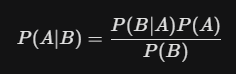
Bayesian statistics—the method of updating the probability of a hypothesis as more evidence becomes available—has seen a massive resurgence. This is due to breakthroughs in Probabilistic Programming and Markov Chain Monte Carlo (MCMC) algorithms that can now handle billions of data points.

This approach is vital for Uncertainty Quantification. In 2025, we don’t just want a single “best guess”; we want to know exactly how much we don’t know, which is essential for autonomous vehicles and high-frequency trading.


4. Edge Analytics and IoT Statistics

With billions of “smart” devices (IoT) generating data every second, we can no longer send all that information to a central server.2 Edge Analytics involves running statistical models directly on the device—the “edge” of the network.

Statisticians are developing “lightweight” models that can detect a failing factory machine or a heart arrhythmia in real-time, using minimal battery power and processing strength.


5. High-Dimensional and Non-Stationary Time Series

In the era of 6G networks and high-frequency finance, data moves too fast for traditional models. Researchers are focusing on Long-Range Dependence (LRD) and the Hurst Exponent ($H$) to understand “memory” in data streams. This helps predict persistent trends in climate change and prevents crashes in volatile markets where the “random walk” theory fails.


Why Statistics Matters in 2025

Statistics is the gatekeeper of truth in an age of misinformation. Whether it is verifying the results of an AI model, auditing an election, or tracking the success of a climate initiative, statistical rigor is what separates a “guess” from a “fact.”

The Architecture of Logic: An Introduction to Theoretical Computer Science

Welcome back to the webref.org blog. While most people think of computer science as the act of building apps or hardware, there is a “purer” side to the field that exists entirely in the realm of logic and mathematics. This is Theoretical Computer Science (TCS).

If software engineering is the construction of a building, TCS is the study of the laws of physics that determine if the building will stand. It doesn’t ask “How do I code this?” but rather, “Is this problem even solvable?”


What is Theoretical Computer Science?

Theoretical Computer Science is a subset of both general computer science and mathematics. It focuses on the mathematical underpinnings of computation. It seeks to understand the fundamental limits of what computers can do, how efficiently they can do it, and the nature of information itself.


The Pillars of Theory

To navigate the world of TCS, you need to understand its three primary branches:

1. Automata Theory

This is the study of abstract machines (automata) and the problems they can solve. The most famous of these is the Turing Machine, a theoretical model developed by Alan Turing. It serves as the blueprint for every computer ever built. Automata theory helps us define different levels of “computational power.”

2. Computability Theory

This branch asks the big question: Is it possible? Surprisingly, there are some problems that no computer, no matter how powerful or how much time it has, can ever solve. The most famous example is the Halting Problem—the proof that you cannot write a program that can determine if any other program will eventually stop or run forever.

3. Computational Complexity

If a problem is solvable, this branch asks: How hard is it? Complexity theory categorizes problems based on the resources (time and memory) required to solve them.

  • P (Polynomial Time): Problems that are “easy” for computers to solve (like sorting a list).

  • NP (Nondeterministic Polynomial Time): Problems where the answer is hard to find, but easy to check (like a Sudoku puzzle).

  • P vs. NP: This is one of the most famous unsolved problems in mathematics. If someone proves that P = NP, it would mean that every problem whose solution can be easily checked can also be easily solved, which would fundamentally change cryptography and AI.


The Language of Theory: Algorithms and Information

At the heart of TCS is the Algorithm. In theory, an algorithm isn’t just code; it is a mathematical entity.

  • Big O Notation: This is the language theorists use to describe the efficiency of an algorithm. It tells us how the running time of a program grows as the input size increases.

  • Information Theory: Developed by Claude Shannon, this looks at how data is compressed and transmitted. It defines the “bit” as the fundamental unit of information and determines the limits of data communication.


Why Theory Matters in 2025

It might seem abstract, but TCS is the reason your modern world works:

  1. Cryptography: Modern security relies on the fact that certain math problems (like factoring large prime numbers) are in a complexity class that is “too hard” for current computers to solve quickly.

  2. Compiler Design: The tools that turn human-readable code into machine language are built using the principles of formal languages and automata theory.

  3. Quantum Computing: Theoretical computer scientists are currently redefining complexity classes to understand what problems a quantum computer could solve that a classical one cannot.

  4. Artificial Intelligence: Understanding the theoretical limits of neural networks helps researchers build more efficient and stable AI models.


The Boundless Frontier

Theoretical Computer Science reminds us that computation is not just a human invention—it is a fundamental property of the universe. By studying these abstract rules, we aren’t just learning about machines; we are learning about the very nature of logic and the limits of human knowledge.

The Architecture of Everything: An Introduction to Systems Theory

Welcome back to the webref.org blog. We’ve explored individual sciences like Biology, Psychology, and Mathematics. But what happens when we want to study how those things work together? How does a forest stay in balance? Why does a traffic jam happen even when no one crashes? To answer these questions, we use Systems Theory.

Systems Theory is a transdisciplinary study of the abstract organization of phenomena. It isn’t a science of “things”—it is a science of relationships. It moves away from “reductionism” (breaking things into tiny parts) and toward “holism” (looking at how those parts interact to form a whole).


What is a System?

A system is any group of interacting or interrelated entities that form a unified whole. Every system is defined by its boundaries, its structure, and its purpose.

Systems generally fall into two categories:

  • Closed Systems: Isolated from their environment (rare in the real world).

  • Open Systems: Constantly exchanging matter, energy, or information with their surroundings (like a cell, a business, or the Earth’s atmosphere).


Core Concepts of Systems Theory

To think like a systems theorist, you need to understand these fundamental principles:

1. Emergence

This is the idea that “the whole is greater than the sum of its parts.” A single ant isn’t very smart, but an ant colony exhibits complex, intelligent behavior. This “intelligence” is an emergent property that doesn’t exist in the individual parts.

2. Feedback Loops

Systems regulate themselves through feedback.

  • Negative Feedback: Counteracts change to maintain stability (like a thermostat keeping a room at 70°F). This leads to Homeostasis.

  • Positive Feedback: Amplifies change, leading to exponential growth or collapse (like a stampede or a viral social media trend).

3. Synergy

This occurs when the interaction of elements produces a total effect greater than the sum of the individual elements. In a team, synergy is what allows a group of people to solve a problem that no single member could solve alone.

4. Entropy

Based on the second law of thermodynamics, entropy is the tendency of a system to move toward disorder and randomness. Open systems must constantly take in “negentropy” (energy or information) to stay organized.


Systems Theory in Practice

Systems Theory is the ultimate “meta-tool.” Because it deals with abstract organization, it can be applied to almost any field:

    • Ecology: Understanding how a change in the population of one predator can cause a “trophic cascade” that affects the entire landscape.

    • Management: Viewing a company as a system where the “Output” (product) depends on the “Input” (raw materials) and the “Process” (culture and workflow).

    • Cybernetics: The study of communication and control in living organisms and machines. This is the foundation of modern robotics and automation.

    • Family Therapy: Viewing a family as a system where one person’s behavior is often a response to the “systemic” pressures of the whole group.

Getty Images

Why Systems Thinking is Your 2025 Superpower

In our hyper-connected world, we face “wicked problems”—challenges like climate change, global economics, and misinformation. These problems cannot be solved by looking at one part in isolation.

Systems thinking allows us to:

  1. See the Big Picture: Move beyond “quick fixes” that cause bigger problems later (unintended consequences).

  2. Identify Leverage Points: Find the small change in a system that can lead to a large, positive shift.

  3. Anticipate Delays: Understand that there is often a “time lag” between a cause and its effect in complex systems.


Final Thought: We are All Systems

From the trillions of cells working in your body to the global internet connecting us all, everything is a system. By understanding the rules of organization, we don’t just learn about science; we learn how to navigate the interconnected reality of the 21st century.

The Science of Uncertainty: An Introduction to Statistics

Welcome back to the webref.org blog. We’ve discussed the absolute certainties of Mathematics and the rigid rules of Logic. Today, we step into the real world—a place of messiness, randomness, and “maybe.” To make sense of this chaos, we use Statistics.

Statistics is the branch of science concerned with collecting, organizing, analyzing, interpreting, and presenting data. If Mathematics is the language of patterns, Statistics is the language of uncertainty. It allows us to turn a mountain of raw information into a clear, actionable story.


Descriptive vs. Inferential Statistics

In your studies, you will encounter two main “flavors” of statistics. Understanding the difference is key to interpreting any scientific study.

1. Descriptive Statistics

This is used to describe or summarize the characteristics of a dataset. It doesn’t try to make broad claims; it simply tells you what is happening right now in the group you are looking at.

    • Measures of Central Tendency: Mean (average), Median (middle), and Mode (most frequent).

    • Measures of Dispersion: Range, Variance, and Standard Deviation (how spread out the data is).

Shutterstock

2. Inferential Statistics

This is where the real power lies. Inferential statistics uses a small sample of data to make predictions or “inferences” about a much larger population.

  • Example: Testing a new medicine on 1,000 people to predict how it will work for millions.

  • Key Concept: The P-Value, which helps scientists determine if their results were a lucky fluke or a genuine discovery.


The “Normal” World: The Bell Curve

One of the most famous concepts in statistics is the Normal Distribution, often called the “Bell Curve.” In nature, many things—like human height, IQ scores, or even the weight of apples—tend to cluster around a central average.

When data follows this pattern, we can use it to make incredibly accurate predictions. For instance, we can calculate exactly how many people in a city will be over six feet tall, even without measuring every single person.

Shutterstock

The Danger Zone: Misleading with Statistics

Statistics are powerful, but they can be easily manipulated. As the saying goes, “Correlation does not imply causation.” Just because two things happen at the same time doesn’t mean one caused the other.

  • Example: Ice cream sales and shark attacks both go up in the summer. Does eating ice cream cause shark attacks? Of course not—the “hidden variable” is the heat, which makes people do both.

  • Sampling Bias: If you only survey people at a gym about their health, your results won’t accurately represent the general population.


Why Statistics is Your 2025 Survival Skill

In a world driven by “Big Data” and AI, statistical literacy is no longer optional. It is the filter that helps you navigate:

  1. Medical News: Should you be worried about a study that says a certain food increases cancer risk by 20%? Understanding absolute vs. relative risk helps you decide.

  2. Economics: Governments use statistics (like the CPI or GDP) to decide interest rates and social spending.

  3. Artificial Intelligence: Machine learning is essentially high-speed statistics. An AI doesn’t “know” things; it predicts the most statistically likely answer based on its training data.

  4. Sports: From “Moneyball” to modern basketball, teams use advanced analytics to find undervalued players and optimize strategies.


Final Thought: Finding the Signal in the Noise

The goal of statistics isn’t to be right 100% of the time—it’s to be less wrong over time. By learning to look at the world through a statistical lens, you stop seeing random events and start seeing the underlying probabilities that shape our lives.

The Architecture of Abstract Truth: An Introduction to Mathematics

Welcome back to the webref.org blog. We have explored the physical world through the Natural Sciences and the digital world through Computer Science. Today, we turn to the most universal language of all: Mathematics.

If science is the study of the universe, mathematics is the language in which that universe is written. It is a Formal Science that deals with the logic of shape, quantity, and arrangement. Unlike other sciences that rely on physical experiments, mathematics relies on proof—a logical demonstration that a statement is true in all cases, forever.


What is Mathematics?

Mathematics is often misunderstood as “the study of numbers.” While numbers are a major part of it, math is more accurately described as the study of patterns. Whether it’s the pattern of a seashell’s spiral, the movement of stock markets, or the orbits of planets, math provides the tools to model, measure, and predict these systems.


The Major Branches of Mathematics

Mathematics is a vast tree with many branches. Here are the primary areas you’ll find in our reference guide:

1. Arithmetic & Number Theory

The foundation of math. Arithmetic deals with basic operations (addition, multiplication), while Number Theory explores the deeper properties of numbers themselves, such as the mystery of prime numbers.

2. Algebra

Algebra is the language of relationships. By using symbols (like $x$ and $y$) to represent unknown values, we can create formulas that describe how one thing changes in relation to another.

3. Geometry & Topology

Geometry is the study of shapes, sizes, and the properties of space. Topology takes this a step further, studying the properties of objects that stay the same even when they are stretched or twisted (like a doughnut being topologically identical to a coffee mug).

4. Calculus

Developed by Newton and Leibniz, calculus is the study of continuous change. It allows us to calculate things that are constantly moving, such as the acceleration of a rocket or the rate at which a virus spreads through a population.

5. Statistics & Probability

These branches deal with uncertainty. Probability predicts how likely an event is to happen, while statistics provides the tools to collect, analyze, and interpret data to find the “signal” within the “noise.”


The Power of Mathematical Proof

In the natural sciences, a theory is “true” until new evidence proves it wrong. In mathematics, we use Axioms (self-evident truths) and Deductive Logic to create Proofs.

Once a theorem—like the Pythagorean Theorem—is proven, it is an absolute truth. It does not expire, it does not change with the weather, and it is true on the other side of the galaxy just as it is true here on Earth.

Getty Images


Why Math Matters in 2025

Mathematics is the invisible engine of the modern world. Without it, our current civilization would cease to function:

  • Cryptography: Your banking and private messages are kept secure by complex prime number math.

  • Architecture: Engineers use trigonometry and calculus to ensure bridges don’t collapse and skyscrapers can sway in the wind.

  • Machine Learning: Artificial Intelligence is essentially a massive system of linear algebra and multivariable calculus.

  • Medicine: Math models are used to understand the structure of proteins and the efficacy of new drug treatments.


The Beauty of Math

Beyond its utility, there is a profound beauty in mathematics. From the Golden Ratio found in nature to the infinite complexity of Fractals, math shows us that the universe is not a chaotic mess, but a structured and elegant system.

“Mathematics, rightly viewed, possesses not only truth, but supreme beauty.” — Bertrand Russell

The Rules of Reason: An Introduction to Logic

Welcome back to the webref.org blog. We often talk about “common sense” or “logical thinking,” but what does that actually mean in a scientific context?

If the various branches of science (Natural, Social, and Computer Science) are the buildings of human knowledge, Logic is the foundation they are all built upon. It is the formal study of the principles of valid reasoning and correct inference. In short, logic is the “science of proof.”


What Exactly is Logic?

Logic is a branch of both Philosophy and the Formal Sciences. It doesn’t care about what is true in the “real world” as much as it cares about whether a conclusion follows correctly from its starting points, known as premises.

In a logical system, if your premises are true and your logic is sound, your conclusion must be true.


The Two Pillars of Logic

Most logical reasoning falls into one of two categories. Understanding the difference is the first step toward better critical thinking.

1. Deductive Reasoning

Deductive logic moves from the general to the specific. It provides absolute certainty. If the premises are true, the conclusion is inescapable.

  • Classic Example:

    • Premise A: All humans are mortal.

    • Premise B: Socrates is a human.

    • Conclusion: Therefore, Socrates is mortal.

2. Inductive Reasoning

Inductive logic moves from the specific to the general. This is the logic used in most scientific experiments. It deals with probability rather than absolute certainty.

  • Example:

    • Observation: Every swan I have seen is white.

    • Conclusion: Most (or all) swans are probably white.

    • (Note: This can be overturned if you find one black swan!)


Symbolic Logic: The Math of Thought

In modern logic, we often move away from words and use symbols. This allows logicians to map out complex arguments like mathematical equations.

The most basic tools here are Logic Gates (used in Computer Science) and Truth Tables. A truth table allows you to see every possible outcome of a logical statement to determine if it is always true (a tautology) or always false (a contradiction).

Shutterstock

The Enemies of Reason: Logical Fallacies

A “fallacy” is a flaw in reasoning. Even if someone is right about their conclusion, if their logic is fallacious, their argument is weak. Recognizing these is a superpower in the age of misinformation.

  • Ad Hominem: Attacking the person instead of the argument.

  • Straw Man: Misrepresenting someone’s argument to make it easier to attack.

  • Slippery Slope: Claiming that one small step will inevitably lead to a chain of disastrous (and unrelated) events.

  • Confirmation Bias: Only looking for “logic” that supports what you already believe.


Why Logic Matters in 2025

Logic isn’t just for ancient Greek philosophers; it is the heartbeat of the 21st century.

  1. Programming: Every line of code in every app you use is a series of logical “If/Then” statements.

  2. Artificial Intelligence: Large Language Models (LLMs) are essentially massive engines of statistical logic.

  3. Critical Thinking: In an era of “fake news” and deepfakes, logic is the filter that helps you distinguish between a valid argument and an emotional manipulation.

  4. Debate and Law: The entire legal system is built on the rules of evidence and logical inference.


Final Thought: Soundness vs. Validity

In logic, an argument can be valid (the structure is correct) but not sound (the premises are false).

  • Valid but Unsound: “All cats are invisible. My pet is a cat. Therefore, my pet is invisible.” The logic works perfectly, but because the first premise is a lie, the argument fails the “reality check.”

By studying logic, you learn to check both the facts and the structure of the world around you.

The Digital Architect: An Introduction to Computer Science

Welcome back to the webref.org blog. We’ve covered the “how” of the universe (Natural Sciences) and the “how” of humanity (Social Sciences). Now, we turn to the science of information and computation.

Many people mistake Computer Science (CS) for the study of computers themselves. As the famous pioneer Edsger Dijkstra once said, “Computer science is no more about computers than astronomy is about telescopes.” At its core, CS is the study of problem-solving using algorithms and data structures.


What Exactly is Computer Science?

Computer science is a bridge between the Formal Sciences (like logic and math) and the Applied Sciences (building things that work). It focuses on how information is stored, processed, and communicated.

Whether you are scrolling through a social media feed, using a GPS, or talking to an AI, you are interacting with the fruits of computer science.


The Core Pillars of Computer Science

To understand the field, it helps to break it down into its fundamental components:

1. Algorithms and Data Structures

This is the “recipe” for problem-solving. An algorithm is a step-by-step set of instructions to complete a task, while data structures are the specific ways we organize information (like lists, trees, or tables) so the computer can access it efficiently.

Shutterstock

2. Architecture and Hardware

This branch looks at how the physical components—the “silicon”—actually execute instructions. It’s the study of CPUs, memory, and how electrical signals translate into the 1s and 0s of binary code.

3. Software Engineering

This is the practical side of CS. It involves the design, development, and maintenance of complex software systems. It focuses on how to write code that is not just functional, but reliable, secure, and scalable.

4. Artificial Intelligence (AI) and Machine Learning

The frontier of 2025. AI focuses on creating systems capable of performing tasks that typically require human intelligence, such as recognizing speech, making decisions, or translating languages.

Getty Images

The Universal Language: Binary and Logic

At the most basic level, every computer operation is based on Boolean Logic—a system of “True” and “False” (or 1 and 0). By combining these simple switches into complex gates (AND, OR, NOT), computer scientists can build everything from a simple calculator to a global internet.

Shutterstock

Why Computer Science Literacy Matters in 2025

You don’t need to be a “coder” to benefit from understanding CS. In the modern world, CS literacy helps with:

  • Computational Thinking: Breaking down large, messy problems into smaller, manageable steps.

  • Data Privacy: Understanding how your information is tracked and stored.

  • Automation: Knowing how to use tools to handle repetitive tasks, freeing up your time for creative work.

  • AI Fluency: Understanding the difference between what an AI is “thinking” and what it is simply predicting based on patterns.


More Than Just Code

Computer science is a creative discipline. Every app or system starts with a blank screen and a question: “Is there a better way to do this?” It is the art of creating order out of the chaos of information.

As we move deeper into the 21st century, Computer Science will continue to be the primary engine of human innovation, turning the “impossible” into the “executable.”

The Architecture of Logic: Understanding the Formal Sciences

Welcome to webref.org. In our previous posts, we explored the physical world through the natural sciences and the human world through the social sciences. Today, we turn our attention inward to the Formal Sciences—the structural “skeleton” that holds all other disciplines together.

While a biologist might study a cell and an astronomer might study a star, a formal scientist studies the systems and rules used to describe them. They are not concerned with what is being measured, but how we measure and reason.


What are the Formal Sciences?

Unlike the natural sciences, which rely on empirical evidence (observation and experimentation), the formal sciences are non-empirical. They deal with abstract systems where truth is determined by logical consistency and proof rather than physical discovery.

The primary branches include:

  • Mathematics: The study of numbers, quantity, space, and change. It provides the universal language of science.

  • Logic: The study of valid reasoning. It ensures that if our starting points (premises) are true, our conclusions are also true.

  • Theoretical Computer Science: The study of algorithms, data structures, and the limits of what can be computed.

  • Statistics: The science of collecting, analyzing, and interpreting data to account for uncertainty.

  • Systems Theory: The interdisciplinary study of complex systems, focusing on how parts interact within a whole.


Why the Formal Sciences are “Different”

To understand the unique nature of these fields, we have to look at how they define “truth.”

  1. A Priori Knowledge: In physics, you must test a theory to see if it’s true. In formal science, truths are often discovered through pure thought. You don’t need to count every apple in the world to know that $2 + 2 = 4$; it is true by the very definition of the symbols.

  2. Absolute Certainty: Scientific theories in biology or chemistry are “provisional”—they can be updated with new evidence. However, a mathematical proof is eternal. The Pythagorean theorem is as true today as it was 2,500 years ago.

  3. Independence from Reality: A mathematician can create a “non-Euclidean” geometry that doesn’t match our physical world, and it is still considered “correct” as long as its internal logic is sound.


The Invisible Backbone of Modern Life

If the formal sciences are so abstract, why do they matter? Because they are the engine of application.

  • Encryption: Every time you buy something online, Number Theory (a branch of math) protects your credit card data.

  • AI and Algorithms: The “intelligence” in Artificial Intelligence is actually a massive application of Linear Algebra and Probability Theory.

  • Decision Making: Game Theory (a formal science) helps economists and military leaders predict how people will behave in competitive situations.

  • Scientific Validity: Without Statistics, a medical trial couldn’t prove that a drug actually works; it would just be a series of anecdotes.


The Intersection of Thought and Reality

The most profound mystery of the formal sciences is what physicist Eugene Wigner called “the unreasonable effectiveness of mathematics.” It is staggering that abstract symbols, cooked up in the human mind, can perfectly predict the movement of a planet or the vibration of an atom.

By studying the formal sciences, we aren’t just learning how to “do math”—we are learning the fundamental grammar of the universe itself.

Robotics

Robotics is an interdisciplinary field that combines aspects of engineering, computer science, mathematics, and physics to design, build, and operate robots. Robots are autonomous or semi-autonomous machines that can perform tasks autonomously or under human control. Robotics encompasses a wide range of subfields, including robot design, control systems, perception, artificial intelligence, and human-robot interaction.

Here are some key concepts and topics within robotics:

  1. Robot Design: Robot design involves the creation of mechanical structures, actuators, sensors, and other components that enable robots to move, manipulate objects, and interact with their environment. Design considerations include factors such as mobility, dexterity, strength, and energy efficiency.
  2. Robot Control: Robot control refers to the algorithms and techniques used to command and coordinate the motion and actions of robots. Control systems can be simple (e.g., open-loop control) or complex (e.g., feedback control, adaptive control) depending on the level of autonomy and precision required for the task.
  3. Sensors and Perception: Sensors are devices that enable robots to perceive and interact with their environment. Common types of sensors used in robotics include cameras, lidar, ultrasonic sensors, inertial measurement units (IMUs), and proximity sensors. Perception algorithms process sensor data to extract information about the robot’s surroundings, such as object detection, localization, mapping, and navigation.
  4. Artificial Intelligence and Machine Learning: Artificial intelligence (AI) and machine learning techniques are used in robotics to enable robots to learn from experience, adapt to changing environments, and make intelligent decisions. AI algorithms are used for tasks such as path planning, object recognition, gesture recognition, and natural language processing. Machine learning techniques, such as reinforcement learning and deep learning, enable robots to improve their performance over time through interaction with the environment.
  5. Kinematics and Dynamics: Kinematics and dynamics are branches of mechanics that study the motion and forces of robotic systems. Kinematics deals with the geometry and motion of robot bodies without considering the forces involved, while dynamics considers the forces and torques acting on robots and their effect on motion. Kinematic and dynamic models are used for robot simulation, motion planning, and control design.
  6. Human-Robot Interaction (HRI): Human-robot interaction focuses on designing interfaces and interaction modalities that enable seamless communication and collaboration between humans and robots. HRI research addresses topics such as robot behavior, gesture recognition, speech recognition, social robotics, and user experience design.
  7. Robot Applications: Robotics has applications in various industries and domains, including manufacturing, healthcare, agriculture, logistics, transportation, space exploration, entertainment, and education. Robots are used for tasks such as assembly, welding, material handling, surgery, rehabilitation, inspection, surveillance, and exploration.
  8. Ethical and Social Implications: As robots become more prevalent in society, there is growing concern about their ethical and social implications. Ethical considerations in robotics include issues such as safety, privacy, job displacement, autonomy, bias, accountability, and robot rights. Researchers and policymakers are working to address these challenges and ensure that robots are developed and deployed in a responsible and ethical manner.

Robotics is a rapidly evolving field with continuous advancements in technology, enabling robots to perform increasingly complex tasks and operate in diverse environments. As robotics technologies continue to advance, they have the potential to transform industries, improve quality of life, and address societal challenges.

Natural language processing

Natural Language Processing (NLP) is a field of artificial intelligence (AI) and linguistics that focuses on enabling computers to understand, interpret, and generate human language in a way that is both meaningful and useful. NLP techniques allow machines to interact with humans through natural language, enabling tasks such as language translation, sentiment analysis, chatbots, and text summarization.

Here are some key concepts and topics within natural language processing:

  1. Tokenization: Tokenization is the process of breaking down a text or sentence into smaller units, such as words or phrases (tokens). Tokenization is a fundamental step in NLP, as it allows machines to process and analyze textual data at a more granular level.
  2. Part-of-Speech Tagging (POS Tagging): POS tagging is the process of assigning grammatical categories (such as noun, verb, adjective, etc.) to each word in a sentence. POS tagging helps machines understand the syntactic structure of a sentence and is used in tasks such as parsing, information extraction, and machine translation.
  3. Named Entity Recognition (NER): NER is the process of identifying and classifying named entities (such as person names, organization names, locations, etc.) within a text. NER is used in information extraction tasks to identify relevant entities and relationships between them.
  4. Sentiment Analysis: Sentiment analysis, also known as opinion mining, is the process of analyzing text to determine the sentiment or emotion expressed within it. Sentiment analysis techniques classify text into categories such as positive, negative, or neutral sentiment, allowing machines to understand opinions and attitudes expressed by users in reviews, social media posts, and other textual data sources.
  5. Text Classification: Text classification is the task of categorizing text documents into predefined classes or categories based on their content. Text classification techniques use machine learning algorithms to learn patterns from labeled training data and make predictions on unseen text documents. Common applications of text classification include spam detection, topic classification, and sentiment analysis.
  6. Machine Translation: Machine translation is the task of automatically translating text from one language to another. Machine translation systems use NLP techniques such as tokenization, POS tagging, and statistical or neural machine translation models to generate translations that are fluent and accurate.
  7. Language Modeling: Language modeling is the process of estimating the probability of a sequence of words occurring in a given language. Language models are used in tasks such as speech recognition, machine translation, and text generation to generate fluent and coherent sentences.
  8. Question Answering: Question answering is the task of automatically answering questions posed by users in natural language. Question answering systems use NLP techniques such as information retrieval, named entity recognition, and semantic parsing to extract relevant information from textual data sources and generate accurate answers to user queries.
  9. Text Summarization: Text summarization is the task of automatically generating a concise and coherent summary of a longer text document. Text summarization techniques use NLP methods such as sentence extraction, sentence compression, and semantic analysis to identify the most important information and condense it into a shorter form.

NLP techniques are used in a wide range of applications and industries, including healthcare, finance, customer service, e-commerce, and social media. As NLP technologies continue to advance, they have the potential to revolutionize how humans interact with computers and information, enabling more natural and intuitive communication interfaces and improving efficiency and productivity in various domains.

Evolutionary computing

Evolutionary computing is a family of computational techniques inspired by principles of natural evolution and Darwinian theory. These techniques are used to solve optimization and search problems by mimicking the process of natural selection, mutation, and reproduction observed in biological evolution.

Here are some key concepts and topics within evolutionary computing:

  1. Genetic Algorithms (GAs): Genetic algorithms are a popular evolutionary computing technique that uses an evolutionary process to find approximate solutions to optimization and search problems. In genetic algorithms, a population of candidate solutions (individuals or chromosomes) evolves over successive generations through processes such as selection, crossover (recombination), and mutation. The fitness of each individual is evaluated based on a predefined objective function, and individuals with higher fitness have a higher probability of being selected for reproduction. Genetic algorithms are used in a wide range of applications, including optimization, machine learning, scheduling, and design optimization.
  2. Evolutionary Strategies (ES): Evolutionary strategies are a variant of evolutionary algorithms that focus on optimizing real-valued parameters using stochastic search techniques. Unlike genetic algorithms, which operate on a fixed-length binary representation, evolutionary strategies use a real-valued representation for parameters and employ strategies such as mutation and recombination to explore the search space. Evolutionary strategies are commonly used in optimization problems with continuous or noisy search spaces, such as parameter optimization in machine learning algorithms and engineering design optimization.
  3. Genetic Programming (GP): Genetic programming is a technique within evolutionary computing that evolves computer programs (expressed as tree structures) to solve problems in symbolic regression, classification, and control. In genetic programming, a population of candidate programs is evolved over successive generations through processes such as crossover, mutation, and reproduction. The fitness of each program is evaluated based on its ability to solve the target problem, and successful programs are selected for further evolution. Genetic programming has applications in symbolic regression, automatic programming, and symbolic regression.
  4. Differential Evolution (DE): Differential evolution is a population-based optimization technique that operates on real-valued vectors and iteratively improves the population through processes such as mutation, crossover, and selection. Differential evolution differs from traditional genetic algorithms in its mutation and crossover strategies, which are based on the differences between randomly selected individuals in the population. Differential evolution is known for its simplicity, efficiency, and effectiveness in solving continuous optimization problems with smooth and noisy objective functions.
  5. Multi-objective Evolutionary Algorithms (MOEAs): Multi-objective evolutionary algorithms are optimization techniques that aim to simultaneously optimize multiple conflicting objectives in a single run. MOEAs maintain a population of candidate solutions that represent trade-offs between different objectives and use techniques such as Pareto dominance, crowding distance, and elitism to evolve a diverse set of high-quality solutions along the Pareto front (the set of non-dominated solutions). MOEAs are used in multi-objective optimization problems in engineering design, finance, and decision-making.
  6. Hybrid and Memetic Algorithms: Hybrid algorithms combine evolutionary computing techniques with other optimization or search methods to leverage their complementary strengths and improve performance. Memetic algorithms incorporate local search or problem-specific knowledge into the evolutionary process to guide the search towards promising regions of the search space. Hybrid and memetic algorithms are used to solve complex optimization problems efficiently and effectively.

Evolutionary computing techniques are widely used in optimization, search, and machine learning problems across various domains, including engineering design, finance, bioinformatics, robotics, and data mining. These techniques provide flexible and robust solutions for solving complex problems with non-linear, multimodal, or noisy objective functions, where traditional optimization methods may struggle to find satisfactory solutions.

Machine learning

Machine learning is a subset of artificial intelligence (AI) that focuses on developing algorithms and techniques that enable computers to learn from data and improve their performance on specific tasks without being explicitly programmed. In other words, machine learning algorithms allow computers to automatically learn patterns and relationships from data and make predictions or decisions based on that learned knowledge.

Here are some key concepts and topics within machine learning:

  1. Supervised Learning: Supervised learning involves training a model on a labeled dataset, where each data point is associated with a target variable or outcome. The goal is to learn a mapping from input features to the corresponding target values. Common supervised learning tasks include classification (predicting discrete labels) and regression (predicting continuous values).
  2. Unsupervised Learning: Unsupervised learning involves training a model on an unlabeled dataset, where the goal is to discover patterns, structures, or relationships within the data. Unsupervised learning tasks include clustering (grouping similar data points together), dimensionality reduction (reducing the number of features while preserving important information), and anomaly detection (identifying unusual patterns or outliers).
  3. Reinforcement Learning: Reinforcement learning involves training an agent to interact with an environment in order to maximize cumulative rewards. The agent learns to take actions based on feedback from the environment, where rewards or penalties are provided based on the outcomes of those actions. Reinforcement learning is used in applications such as game playing, robotics, and autonomous systems.
  4. Deep Learning: Deep learning is a subfield of machine learning that focuses on artificial neural networks with multiple layers (deep neural networks). Deep learning architectures are capable of learning hierarchical representations of data, enabling them to automatically extract features from raw input data. Deep learning has achieved significant success in tasks such as image recognition, natural language processing, and speech recognition.
  5. Feature Engineering: Feature engineering involves selecting, transforming, or creating new features from raw data to improve the performance of machine learning models. Feature engineering plays a crucial role in designing effective models and extracting meaningful information from the data. Techniques include normalization, scaling, encoding categorical variables, and creating new features based on domain knowledge.
  6. Model Evaluation and Selection: Model evaluation involves assessing the performance of machine learning models on unseen data to determine their effectiveness and generalization ability. Common metrics for model evaluation include accuracy, precision, recall, F1 score, and area under the ROC curve (AUC). Model selection involves choosing the best-performing model among different algorithms or configurations based on evaluation results.
  7. Hyperparameter Tuning: Hyperparameters are parameters that control the behavior of machine learning algorithms but are not learned from the data. Hyperparameter tuning involves selecting the optimal values for these parameters to maximize the performance of the model. Techniques for hyperparameter tuning include grid search, random search, and Bayesian optimization.
  8. Model Deployment and Monitoring: Model deployment involves integrating trained machine learning models into production systems to make predictions or decisions in real-time. Model monitoring involves continuously monitoring the performance of deployed models, detecting drifts or changes in data distribution, and retraining models as necessary to maintain their effectiveness over time.

Machine learning has applications in various domains, including healthcare, finance, e-commerce, recommendation systems, computer vision, natural language processing, and autonomous vehicles. As machine learning technologies continue to advance, they have the potential to drive innovations, improve efficiency, and enable new capabilities across a wide range of industries and applications.