
Ammonium chlorate

Ammonium chlorate, with the chemical formula NH4ClO3, is a chemical compound composed of ammonium ions (NH4+) and chlorate ions (ClO3-). It is a white crystalline solid that is highly soluble in water.

Ammonium chlorate is a powerful oxidizing agent and can be used in various chemical reactions and applications, but it is also highly sensitive to shock and friction, making it a hazardous material. As a result, its use and handling are strictly regulated and limited due to safety concerns.

Some key properties and uses of ammonium chlorate include:

  1. Oxidizing Agent: Ammonium chlorate is a strong oxidizing agent. It can transfer oxygen atoms to other substances during chemical reactions, causing them to undergo oxidation.
  2. Pyrotechnics: Ammonium chlorate has been used in pyrotechnics to produce green-colored flames and fireworks.
  3. Matches: It has been used in some matches as an oxidizer to facilitate combustion.
  4. Chemical Synthesis: It is utilized as a reactant in various chemical synthesis processes.

Due to its extreme sensitivity and potential for hazardous reactions, ammonium chlorate is not commonly used or encountered in everyday applications. Its use in pyrotechnics and matches has been limited and restricted due to safety concerns. For industrial or research purposes, it requires special handling, storage, and safety precautions to prevent accidents.

Given its hazardous nature, the production, storage, and use of ammonium chlorate are strictly regulated by various safety and environmental agencies. It is essential to follow proper safety guidelines and dispose of any waste containing ammonium chlorate responsibly and in accordance with local regulations.
Ammonium chloride

Ammonium chloride, with the chemical formula NH4Cl, is a chemical compound composed of ammonium ions (NH4+) and chloride ions (Cl-). It is a white crystalline salt that is highly soluble in water and has a salty taste.

Ammonium chloride has several key properties and uses, including:

  1. Flux in Soldering: Ammonium chloride is used as a flux in soldering processes. It helps remove metal oxides from the surface of metal parts, ensuring better adhesion of solder and improved soldering quality.
  2. Fertilizer: It is used as a nitrogen-based fertilizer in agriculture. The ammonium ions in ammonium chloride provide essential nitrogen for plant growth.
  3. Dry Cell Batteries: Ammonium chloride is used in some types of dry cell batteries as an electrolyte.
  4. pH Control: It is used to control pH levels in certain industrial processes.
  5. Textile Printing and Dyeing: Ammonium chloride is used in some textile printing and dyeing processes.
  6. Cough Medicines: Ammonium chloride has been used in some cough medicines as an expectorant, helping to thin and loosen mucus in the respiratory tract.

Ammonium chloride is generally considered safe for its intended uses, but like any chemical compound, it should be handled with care. Ingestion of large quantities can cause health issues, and inhalation of its dust can irritate the respiratory system. Proper safety measures and handling procedures should be followed when working with ammonium chloride to prevent accidents and ensure personal and environmental safety.

Ammonium cerium(IV) sulfate

Ammonium cerium(IV) sulfate, with the chemical formula (NH4)4Ce(SO4)4, is a chemical compound composed of ammonium ions (NH4+), cerium ions in the +4 oxidation state (Ce4+), and sulfate ions (SO4^2-). It is a yellow or orange crystalline solid.

Ammonium cerium(IV) sulfate is an important chemical in certain chemical reactions and applications, particularly in redox reactions and analytical chemistry. Some key properties and uses include:

  1. Oxidizing Agent: Ammonium cerium(IV) sulfate is a powerful oxidizing agent. It can transfer oxygen atoms to other substances during chemical reactions, facilitating oxidation processes.
  2. Redox Reactions: It is used in various redox reactions, where it acts as an oxidizing agent, causing other substances to undergo reduction.
  3. Titration Agent: In analytical chemistry, ammonium cerium(IV) sulfate is used as a titration agent to determine the concentration of certain substances in a solution.
  4. Cerium Ion Source: It is utilized as a source of cerium ions in certain chemical reactions and processes.

Ammonium cerium(IV) sulfate is a hazardous chemical and should be handled with care in a laboratory setting. It is considered toxic and can cause skin and eye irritation upon contact. Proper safety precautions, such as the use of personal protective equipment and appropriate ventilation, should be followed when working with this compound.

Due to its reactivity and usefulness as an oxidizing agent, ammonium cerium(IV) sulfate is an important tool in various chemical reactions, especially those involving redox processes and analytical determinations. However, its use requires a good understanding of its properties and careful handling to ensure safety and successful outcomes in laboratory applications.

Ammonium cerium(IV) nitrate

Ammonium cerium(IV) nitrate, with the chemical formula (NH4)2Ce(NO3)6, is a chemical compound composed of ammonium ions (NH4+), cerium ions in the +4 oxidation state (Ce4+), and nitrate ions (NO3-). It is a yellow or orange crystalline solid.

Ammonium cerium(IV) nitrate is an important chemical in certain chemical reactions and applications, particularly in organic synthesis and analytical chemistry. Some key properties and uses include:

  1. Oxidizing Agent: Ammonium cerium(IV) nitrate is a powerful oxidizing agent. It can transfer oxygen atoms to other substances during chemical reactions, facilitating oxidation processes.
  2. Organic Synthesis: It is widely used in organic synthesis for various reactions, such as the conversion of alcohols to aldehydes or ketones and the oxidative cleavage of double bonds in organic compounds.
  3. Testing of Alkenes and Alkynes: In analytical chemistry, ammonium cerium(IV) nitrate is used as a test reagent for the presence of alkenes and alkynes in organic compounds. The reagent produces characteristic color changes in the presence of these unsaturated compounds.
  4. Cerium Ion Source: It is utilized as a source of cerium ions in certain chemical reactions and processes.

Ammonium cerium(IV) nitrate is a hazardous chemical and should be handled with care in a laboratory setting. It is considered toxic and can cause skin and eye irritation upon contact. Proper safety precautions, such as the use of personal protective equipment and appropriate ventilation, should be followed when working with this compound.

Due to its reactivity and usefulness as an oxidizing agent, ammonium cerium(IV) nitrate is an important tool in various chemical reactions, especially in organic synthesis and analytical chemistry. However, its use requires a good understanding of its properties and careful handling to ensure safety and successful outcomes in laboratory applications.

Ammonium chromate

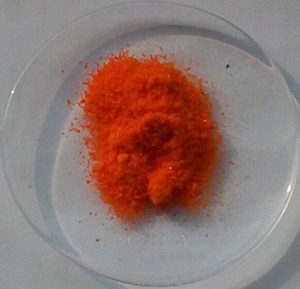
Ammonium chromate, with the chemical formula (NH4)2CrO4, is a chemical compound composed of ammonium ions (NH4+) and chromate ions (CrO4^2-). It is a yellow-orange crystalline solid that is highly soluble in water.

Ammonium chromate has several key properties and uses, including:

  1. Laboratory Reagent: It is commonly used as a laboratory reagent in various chemical reactions and analyses.
  2. Analytical Chemistry: Ammonium chromate is used in analytical chemistry as a source of chromate ions for certain tests and experiments.
  3. Metal Finishing: In some metal finishing processes, ammonium chromate is used as a corrosion inhibitor and a surface treatment to improve the adhesion of coatings.
  4. Dyeing: It has been used in dyeing processes as a mordant to improve the colorfastness of certain dyes.
  5. Pigment and Photography: Historically, ammonium chromate was used in pigment production and photography. However, its use in these applications has declined due to safety and environmental concerns.

It’s important to note that ammonium chromate is a toxic and hazardous chemical. It is considered harmful if ingested, inhaled, or absorbed through the skin. It is also a strong oxidizer and can react violently with reducing agents, organic materials, and other substances.

Due to its toxic and hazardous nature, the use of ammonium chromate is strictly regulated, and proper safety precautions should be taken when handling it in a laboratory or industrial setting. Personal protective equipment and proper ventilation are necessary to minimize exposure and potential risks.

Ammonium bromide

Ammonium bromide, with the chemical formula NH4Br, is a chemical compound composed of ammonium ions (NH4+) and bromide ions (Br-). It is a white crystalline solid that is highly soluble in water.

Ammonium bromide has several key properties and uses, including:

  1. Pharmaceutical and Medicinal Uses: Ammonium bromide has been historically used in the pharmaceutical industry as a sedative and anticonvulsant. However, its use in modern medicine has declined due to the availability of safer and more effective alternatives.
  2. Photography: In traditional black and white photography, ammonium bromide was used in photographic emulsions as a halide source. It played a role in controlling the sensitivity of the photographic material to light.
  3. Laboratory Reagent: Ammonium bromide is used as a laboratory reagent in various chemical reactions and analyses.
  4. Chemical Synthesis: It serves as a source of bromide ions in chemical synthesis processes.
  5. Galvanizing and Tinning: Ammonium bromide has been used in metal surface treatment processes, such as galvanizing and tinning, to improve the adhesion of coatings.
  6. Flame Retardant: Ammonium bromide has some applications as a flame retardant in certain materials and products.

While ammonium bromide has historically found uses in various applications, its significance in modern industrial and pharmaceutical settings has diminished. This is due to the availability of safer and more effective alternatives for its former uses.

As with any chemical compound, proper safety precautions should be taken when handling ammonium bromide, and its use should adhere to relevant safety guidelines and regulations.

Ammonium bisulfate

Ammonium bisulfate, with the chemical formula (NH4)HSO4, is a chemical compound composed of ammonium ions (NH4+) and bisulfate ions (HSO4-). It is a white crystalline solid that is soluble in water.

Ammonium bisulfate has several key properties and uses, including:

  1. pH Regulator: It is commonly used as a pH regulator and acidifier in various industries, including agriculture and water treatment. When added to water or soil, it releases hydrogen ions (H+) and sulfate ions (SO4^2-), which help to lower the pH and make the solution more acidic.
  2. Fertilizer: Ammonium bisulfate is used as a nitrogen fertilizer in agriculture. It provides both ammonium ions and sulfate ions, which are essential nutrients for plant growth.
  3. Metal Cleaning and Etching: In some industrial applications, ammonium bisulfate is used as a cleaning agent and etchant for metals.
  4. Water Treatment: It is used in water treatment processes to adjust the pH of water and enhance the removal of impurities and metals.
  5. Food Additive: Ammonium bisulfate is used as a food additive in certain food products. It is recognized as safe by regulatory authorities when used within specified limits.

Like other chemicals, ammonium bisulfate should be handled with care, and proper safety precautions should be followed when working with it. It is essential to store it in a cool, dry place away from incompatible substances to prevent hazardous reactions.

As a fertilizer and pH regulator, ammonium bisulfate plays a significant role in agriculture and water treatment. Its versatile applications in various industries make it an important chemical in the field of chemistry and technology.

Ammonium bicarbonate

Ammonium bicarbonate, with the chemical formula NH4HCO3, is a chemical compound composed of ammonium ions (NH4+) and bicarbonate ions (HCO3-). It is a white, crystalline solid that is soluble in water and has a slightly ammoniacal odor.

Ammonium bicarbonate has several key properties and uses, including:

  1. Baking Agent: Ammonium bicarbonate is used as a leavening agent in baking. When heated, it decomposes into ammonia (NH3), carbon dioxide (CO2), and water (H2O). The release of carbon dioxide gas during baking causes the dough or batter to rise, resulting in a light and airy texture in baked goods like cookies and crackers.
  2. pH Buffer: Ammonium bicarbonate acts as a pH buffer, helping to stabilize the pH of solutions and prevent drastic changes in acidity or alkalinity.
  3. Textile and Dyeing Industry: It is used in the textile and dyeing industry as a mild alkali to treat fabrics and aid in the dyeing process.
  4. Chemical Synthesis: Ammonium bicarbonate serves as a reactant in various chemical synthesis processes to produce other compounds.
  5. Neutralizing Agent: In some applications, ammonium bicarbonate is used as a neutralizing agent for acidic substances.

It’s important to note that ammonium bicarbonate can release ammonia gas when heated or exposed to moisture, and it can also react with acids to produce carbon dioxide gas. Therefore, it should be handled with care, and adequate ventilation should be provided when using it in baking or other applications.

In recent years, the use of ammonium bicarbonate in the food industry has decreased due to safety concerns related to the potential presence of residual ammonia and the development of alternative leavening agents with better performance and stability. Other leavening agents like baking soda (sodium bicarbonate) and baking powder are more commonly used in modern baking practices.

Ammonium azide

Ammonium azide, with the chemical formula NH4N3, is a chemical compound composed of ammonium ions (NH4+) and azide ions (N3-). It is a highly unstable and sensitive explosive compound.

Ammonium azide is not commonly encountered or used due to its extreme instability and explosive nature. It is considered highly dangerous and is prone to spontaneous decomposition, which can lead to violent and explosive reactions. For this reason, it is not used in practical applications or commercial products.

Due to its hazards, handling, synthesizing, or storing ammonium azide requires specialized equipment, facilities, and expert knowledge. Even slight disturbances or temperature changes can trigger its explosive decomposition.

Because of the extreme danger posed by ammonium azide, it is not used in any mainstream industrial or laboratory applications. Researchers and chemists working with azides or other explosive compounds must exercise extreme caution and follow strict safety protocols to prevent accidents and ensure personal and environmental safety.

Ammonia

Ammonia (NH3) is a colorless gas with a distinct pungent smell. It is one of the most essential and widely used industrial chemicals, serving various purposes across different industries. Ammonia is composed of one nitrogen atom bonded to three hydrogen atoms, making it a simple but crucial compound.

Key properties and uses of ammonia include:

  1. Fertilizer Production: Ammonia is a fundamental building block for the production of nitrogen-based fertilizers. It provides essential nitrogen for plant growth and is a vital component in modern agriculture, helping to increase crop yields.
  2. Refrigeration: Ammonia is used as a refrigerant in industrial refrigeration systems. It is environmentally friendly, having no ozone-depleting potential, and has excellent heat transfer properties.
  3. Cleaning Agent: Ammonia is used as a cleaning agent for various household and industrial purposes. It is effective in removing stains, grease, and dirt from surfaces.
  4. Pharmaceutical Industry: Ammonia is used in the production of various pharmaceutical products and medicines.
  5. Water Treatment: Ammonia is used in some water treatment processes to control pH and as a source of nitrogen for beneficial bacteria in biological wastewater treatment systems.
  6. Explosives Production: Ammonia is a crucial component in the production of certain explosives.
  7. Laboratory Reagent: In laboratories, ammonia is used as a reagent in various chemical reactions.

Ammonia is highly soluble in water, and when dissolved in water, it forms ammonium hydroxide (NH4OH), a solution commonly known as ammonia water. Ammonia gas is also reactive and can act as a weak base, forming ammonium ions (NH4+) when it reacts with acids.

While ammonia is a valuable and versatile chemical, it is essential to handle it with care, especially in concentrated form, as it can be hazardous to health and can cause respiratory irritation when inhaled. Proper safety precautions and handling procedures should be followed when working with ammonia to prevent exposure and accidents.

Americium dioxide

Americium dioxide, with the chemical formula AmO2, is a chemical compound composed of the radioactive element americium (Am) and oxygen (O). It is an oxide of americium and belongs to the group of actinide dioxides.

AmO2 is a solid compound that is not commonly encountered outside of scientific research and nuclear applications due to the rarity and radioactive nature of americium. Some key points about Americium dioxide include:

  1. Radioactive: Americium is a synthetic element, primarily produced in nuclear reactors, and it is radioactive. As a compound of americium, AmO2 would also be radioactive, posing health hazards and requiring strict safety measures when handling and working with it.
  2. Nuclear Applications: Americium is used in some industrial and research applications, such as in smoke detectors, neutron sources, and certain types of nuclear batteries. Americium dioxide is of interest in scientific research to study the behavior and properties of actinide dioxides.
  3. Limited Practical Applications: Americium dioxide is not commonly used in industrial or commercial applications due to its radioactivity. Its primary significance is in scientific research and nuclear-related studies.

Given the radioactive nature of Americium dioxide and other americium compounds, strict safety protocols and regulations must be followed when working with these materials. Handling and storage require specialized facilities and trained personnel to minimize potential risks to health and the environment.

Americium(III) iodide

Americium(III) iodide (AmI3) is a chemical compound composed of the radioactive element americium (Am) in its +3 oxidation state and iodine (I). Americium is a synthetic element, primarily produced in nuclear reactors, and its chemistry is mainly studied in its +3 oxidation state.

AmI3 is not commonly encountered outside of scientific research and nuclear applications due to the rarity and radioactive nature of americium. Some key points about Americium(III) iodide include:

  1. Radioactive: Americium is a radioactive element, and AmI3, as a compound of americium, would also be radioactive. Due to its radioactivity, americium poses health hazards and requires strict safety measures when handling and working with its compounds.
  2. Nuclear Applications: Americium is used in some industrial and research applications, such as in smoke detectors, neutron sources, and certain types of nuclear batteries. Americium(III) iodide is of interest in scientific research to study the behavior and properties of actinides.
  3. Limited Practical Applications: Americium(III) iodide is not commonly used in industrial or commercial applications due to its radioactivity. Its primary significance is in scientific research and nuclear-related studies.

Given the radioactive nature of Americium(III) iodide and other americium compounds, strict safety protocols and regulations must be followed when working with these materials. Handling and storage require specialized facilities and trained personnel to minimize potential risks to health and the environment.