
The Carbon Revolution: Current Breakthroughs in Organic Chemistry

Organic chemistry is undergoing a radical transformation as we head into 2026. This post explores the cutting-edge developments in bio-orthogonal synthesis, the rise of AI-driven autonomous laboratories, and the breakthrough of C-H activation catalysts. By merging traditional synthesis with artificial intelligence and green principles, chemists are now able to design life-saving drugs and sustainable materials with unprecedented precision and zero waste.

Organic chemistry—once defined strictly as the study of carbon-based compounds derived from living things—has transformed into the primary engine for modern material science and drug discovery. As of 2026, the field is moving away from traditional, energy-intensive synthesis methods toward “Green Chemistry” and automated discovery. We are currently witnessing a shift where the unpredictability of molecular bonding is being tamed by artificial intelligence and innovative catalytic processes, promising a future of sustainable plastics and precision medicine.

The Dawn of “Click Chemistry” 2.0 and Bio-orthogonal Synthesis

A major ongoing event in the organic sphere is the refinement of bio-orthogonal chemistry—reactions that occur inside living systems without interfering with native biochemical processes. Building on the Nobel-winning foundation of Click Chemistry, researchers are now developing “Switchable Click” reactions. These allow scientists to deliver a non-toxic prodrug to a specific tumor site and then “click” it into its active, toxic form using a secondary catalyst. This level of spatial and temporal control over organic synthesis within a human body is currently in clinical trials, representing a monumental leap from the laboratory flask to the living cell.

AI-Driven Retrosynthesis and the “Autonomous Lab”

Perhaps the most disruptive current event is the total integration of Machine Learning into organic synthesis. Traditionally, a chemist would spend weeks designing a “retrosynthesis” path—working backward from a complex molecule to simple starting materials. Today, platforms like IBM’s RoboRXN and specialized AI models can predict the most efficient synthetic route in seconds. Even more impressive are the “Closed-Loop” autonomous laboratories currently operating in major research hubs. These systems use AI to design an experiment, robotic arms to execute the reaction, and real-time NMR (Nuclear Magnetic Resonance) to analyze the results, feeding the data back into the AI to optimize the next run without human intervention.

C-H Activation: Rewriting the Rules of Bonding

For decades, the carbon-hydrogen (C-H) bond was considered largely “inert” or unreactive, requiring extreme conditions to break. A significant current trend in organic research is the development of highly selective catalysts that can “snip” a specific C-H bond and replace it with a functional group (like an alcohol or an amine) at room temperature. This C-H Activation is revolutionary because it eliminates the need for “leaving groups” like halides, which produce significant chemical waste. By making the most common bond in organic chemistry the most useful one, we are moving toward a “waste-free” synthetic future that mimics the efficiency of enzymes in nature.

Conclusion

From the automation of the laboratory to the precise editing of molecules inside the body, organic chemistry is no longer just about understanding carbon—it’s about mastering it. As we continue to bridge the gap between synthetic chemistry and biological systems, the “Organic” in the title is becoming more literal than ever before. We are moving toward a world where the molecules we need are not just discovered, but systematically engineered for a sustainable and healthy planet.
The Data Revolution: Current Topics in Statistics

The field of statistics is undergoing its most significant transformation in decades. From the shift toward “Causal Inference” to the rise of “Synthetic Data” and real-time “Edge Analytics,” discover how modern statisticians are turning the noise of Big Data into the signal of truth on WebRef.org.

Welcome back to the WebRef.org blog. We have decoded the power structures of political science and the massive engines of macroeconomics. Today, we look at the mathematical “glue” that holds all these disciplines together: Statistics.

In 2025, statistics is no longer just about calculating averages or drawing pie charts. It has become a high-stakes, computational science focused on high-dimensional data, automated decision-making, and the ethical pursuit of privacy. Here are the defining topics in the field today.


1. Causal Inference: Moving Beyond Correlation

The old mantra “correlation does not imply causation” is finally getting a formal solution. Causal Inference is now a core pillar of statistics, using tools like Directed Acyclic Graphs (DAGs) and the Potential Outcomes Framework to determine why things happen, rather than just noting that two things happen together.

This is critical in medicine and public policy where randomized controlled trials (the gold standard) aren’t always possible. By using structural equation modeling, statisticians can “control” for variables after the fact to find the true impact of a new drug or a tax change.


2. Synthetic Data and Privacy-Preserving Analytics

As data privacy laws become stricter globally, statisticians have turned to a brilliant workaround: Synthetic Data. Instead of using real customer records, algorithms generate a completely fake dataset that has the exact same statistical properties as the original.

This allows researchers to study patterns—like disease spread or financial fraud—without ever seeing a single piece of private, identifiable information. This often goes hand-in-hand with Differential Privacy, a mathematical technique that adds a calculated amount of “noise” to data to mask individual identities while preserving the overall trend.


3. Bayesian Computation at Scale

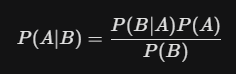
Bayesian statistics—the method of updating the probability of a hypothesis as more evidence becomes available—has seen a massive resurgence. This is due to breakthroughs in Probabilistic Programming and Markov Chain Monte Carlo (MCMC) algorithms that can now handle billions of data points.

This approach is vital for Uncertainty Quantification. In 2025, we don’t just want a single “best guess”; we want to know exactly how much we don’t know, which is essential for autonomous vehicles and high-frequency trading.


4. Edge Analytics and IoT Statistics

With billions of “smart” devices (IoT) generating data every second, we can no longer send all that information to a central server.2 Edge Analytics involves running statistical models directly on the device—the “edge” of the network.

Statisticians are developing “lightweight” models that can detect a failing factory machine or a heart arrhythmia in real-time, using minimal battery power and processing strength.


5. High-Dimensional and Non-Stationary Time Series

In the era of 6G networks and high-frequency finance, data moves too fast for traditional models. Researchers are focusing on Long-Range Dependence (LRD) and the Hurst Exponent ($H$) to understand “memory” in data streams. This helps predict persistent trends in climate change and prevents crashes in volatile markets where the “random walk” theory fails.


Why Statistics Matters in 2025

Statistics is the gatekeeper of truth in an age of misinformation. Whether it is verifying the results of an AI model, auditing an election, or tracking the success of a climate initiative, statistical rigor is what separates a “guess” from a “fact.”