
The Language of Uncertainty: A Deep Dive into the World of Statistics

Statistics is the essential science of learning from data and navigating a world defined by uncertainty. This blog post explores the foundational concepts of Probability, the “magic” of the Central Limit Theorem, and the critical importance of Inference. We delve into the nuances of Correlation vs. Causation and look at how 2026’s revolution in Predictive Analytics and Algorithmic Fairness is transforming every aspect of our digital lives.

In an era defined by “Big Data,” statistics has become the silent engine driving the modern world. It is the science of learning from data, providing the tools to navigate a reality that is fundamentally uncertain. From the algorithms that curate your social media feed to the clinical trials that determine the safety of new life-saving medications, statistics is the bridge between raw, chaotic information and actionable knowledge.

In this exploration, we will journey through the foundational concepts of statistical thinking, the power of distributions, the nuances of inference, and how the “statistical revolution” of 2026 is transforming everything from sports to environmental policy.


1. Beyond the Average: Understanding Data

At its simplest level, statistics is about describing a set of data. We often start with “Measures of Central Tendency”—mean, median, and mode—to find the “middle” of a dataset. However, an average rarely tells the whole story.

The Power of Dispersion

To truly understand a dataset, we must look at its variance and standard deviation. These metrics tell us how “spread out” the data is. A high standard deviation in test scores might suggest a wide gap in student understanding, while a low one indicates a consistent level of performance. In 2026, understanding dispersion is critical for supply chain management, where consistency is often more valuable than a high average.

Shutterstock

2. Probability: The Foundation of Statistics

Statistics and probability are two sides of the same coin. Probability is the study of random processes; statistics uses those processes to make sense of observations.

  • The Law of Large Numbers: This principle states that as the number of trials increases, the actual results will converge toward the expected theoretical probability. This is why casinos always win in the long run, even if a single gambler has a lucky night.

  • The Central Limit Theorem: This is the “magic” of statistics. It states that if you take enough samples from any population, the distribution of the sample means will follow a normal distribution (a bell curve), regardless of the shape of the original population. This allows statisticians to make precise predictions about very complex, messy systems.


3. Statistical Inference: Drawing Conclusions from a Part

We rarely have access to an entire “population” (like every person on Earth). Instead, we work with a sample. Statistical inference is the process of using that sample to make an educated guess about the whole.

Hypothesis Testing and P-Values

How do we know if a new drug actually works, or if the results were just a fluke? We use hypothesis testing. We start with a “Null Hypothesis” (the drug does nothing) and see if the data provides enough evidence to reject it. The p-value is the probability that we would see our results if the null hypothesis were true. In 2026, the scientific community is moving toward more nuanced “Confidence Intervals” rather than relying solely on the binary “significant vs. non-significant” p-value.


4. Correlation vs. Causation: The Ultimate Trap

One of the most important lessons in statistics is that just because two things happen together doesn’t mean one caused the other. Ice cream sales and shark attacks are highly correlated, but that’s because they both increase during the summer (the “hidden variable” of heat).

In 2026, Causal Inference is a burgeoning field. Using sophisticated “Bayesian Networks,” statisticians are now able to disentangle complex webs of variables to determine true cause-and-effect relationships in areas like climate change and economic policy.


5. Regression: Predicting the Future

Regression analysis allows us to model the relationship between variables. A “Simple Linear Regression” might predict a person’s height based on their parents’ heights. More complex “Multiple Regressions” can predict house prices by looking at square footage, location, school district ratings, and local interest rates simultaneously.

In the modern world, regression is the basis of Predictive Analytics. Retailers use it to predict which products will trend next month, and meteorologists use it to refine hurricane path projections.


6. Statistics in 2026: The New Frontiers

The role of the statistician has evolved into that of the “Data Scientist.” Here is how statistics is shaping our immediate future:

  • Algorithmic Fairness: As AI makes more decisions—from hiring to loan approvals—statisticians are working to ensure these models aren’t biased. By auditing the underlying data distributions, they can detect and correct for systemic inequities.

  • Precision Medicine: Instead of “one size fits all” treatments, statistics allows doctors to analyze a patient’s unique genetic markers against vast databases to find the most effective treatment for that specific individual.

  • Sports Analytics: Beyond the “Moneyball” era, teams now use “Spatial Statistics” to track every player’s movement in real-time, calculating the probability of a successful play from any point on the field or court.


7. Conclusion: Thinking Statistically

To think statistically is to embrace a more honest view of the world. It is the realization that “anecdotes are not data” and that “certainty” is an illusion. By learning to interpret the language of uncertainty, we become better consumers of information, more effective problem solvers, and more informed citizens.

Statistics is more than just a branch of mathematics; it is the essential toolkit for the 21st century. Whether you are looking at a political poll, a financial report, or a medical study, the ability to “see through the numbers” is perhaps the most powerful skill one can possess in 2026.
The Data Revolution: Current Topics in Statistics

The field of statistics is undergoing its most significant transformation in decades. From the shift toward “Causal Inference” to the rise of “Synthetic Data” and real-time “Edge Analytics,” discover how modern statisticians are turning the noise of Big Data into the signal of truth on WebRef.org.

Welcome back to the WebRef.org blog. We have decoded the power structures of political science and the massive engines of macroeconomics. Today, we look at the mathematical “glue” that holds all these disciplines together: Statistics.

In 2025, statistics is no longer just about calculating averages or drawing pie charts. It has become a high-stakes, computational science focused on high-dimensional data, automated decision-making, and the ethical pursuit of privacy. Here are the defining topics in the field today.


1. Causal Inference: Moving Beyond Correlation

The old mantra “correlation does not imply causation” is finally getting a formal solution. Causal Inference is now a core pillar of statistics, using tools like Directed Acyclic Graphs (DAGs) and the Potential Outcomes Framework to determine why things happen, rather than just noting that two things happen together.

This is critical in medicine and public policy where randomized controlled trials (the gold standard) aren’t always possible. By using structural equation modeling, statisticians can “control” for variables after the fact to find the true impact of a new drug or a tax change.


2. Synthetic Data and Privacy-Preserving Analytics

As data privacy laws become stricter globally, statisticians have turned to a brilliant workaround: Synthetic Data. Instead of using real customer records, algorithms generate a completely fake dataset that has the exact same statistical properties as the original.

This allows researchers to study patterns—like disease spread or financial fraud—without ever seeing a single piece of private, identifiable information. This often goes hand-in-hand with Differential Privacy, a mathematical technique that adds a calculated amount of “noise” to data to mask individual identities while preserving the overall trend.


3. Bayesian Computation at Scale

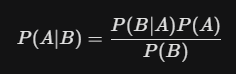
Bayesian statistics—the method of updating the probability of a hypothesis as more evidence becomes available—has seen a massive resurgence. This is due to breakthroughs in Probabilistic Programming and Markov Chain Monte Carlo (MCMC) algorithms that can now handle billions of data points.

This approach is vital for Uncertainty Quantification. In 2025, we don’t just want a single “best guess”; we want to know exactly how much we don’t know, which is essential for autonomous vehicles and high-frequency trading.


4. Edge Analytics and IoT Statistics

With billions of “smart” devices (IoT) generating data every second, we can no longer send all that information to a central server.2 Edge Analytics involves running statistical models directly on the device—the “edge” of the network.

Statisticians are developing “lightweight” models that can detect a failing factory machine or a heart arrhythmia in real-time, using minimal battery power and processing strength.


5. High-Dimensional and Non-Stationary Time Series

In the era of 6G networks and high-frequency finance, data moves too fast for traditional models. Researchers are focusing on Long-Range Dependence (LRD) and the Hurst Exponent ($H$) to understand “memory” in data streams. This helps predict persistent trends in climate change and prevents crashes in volatile markets where the “random walk” theory fails.


Why Statistics Matters in 2025

Statistics is the gatekeeper of truth in an age of misinformation. Whether it is verifying the results of an AI model, auditing an election, or tracking the success of a climate initiative, statistical rigor is what separates a “guess” from a “fact.”

The Architecture of Logic: Understanding the Formal Sciences

Welcome to webref.org. In our previous posts, we explored the physical world through the natural sciences and the human world through the social sciences. Today, we turn our attention inward to the Formal Sciences—the structural “skeleton” that holds all other disciplines together.

While a biologist might study a cell and an astronomer might study a star, a formal scientist studies the systems and rules used to describe them. They are not concerned with what is being measured, but how we measure and reason.


What are the Formal Sciences?

Unlike the natural sciences, which rely on empirical evidence (observation and experimentation), the formal sciences are non-empirical. They deal with abstract systems where truth is determined by logical consistency and proof rather than physical discovery.

The primary branches include:

  • Mathematics: The study of numbers, quantity, space, and change. It provides the universal language of science.

  • Logic: The study of valid reasoning. It ensures that if our starting points (premises) are true, our conclusions are also true.

  • Theoretical Computer Science: The study of algorithms, data structures, and the limits of what can be computed.

  • Statistics: The science of collecting, analyzing, and interpreting data to account for uncertainty.

  • Systems Theory: The interdisciplinary study of complex systems, focusing on how parts interact within a whole.


Why the Formal Sciences are “Different”

To understand the unique nature of these fields, we have to look at how they define “truth.”

  1. A Priori Knowledge: In physics, you must test a theory to see if it’s true. In formal science, truths are often discovered through pure thought. You don’t need to count every apple in the world to know that $2 + 2 = 4$; it is true by the very definition of the symbols.

  2. Absolute Certainty: Scientific theories in biology or chemistry are “provisional”—they can be updated with new evidence. However, a mathematical proof is eternal. The Pythagorean theorem is as true today as it was 2,500 years ago.

  3. Independence from Reality: A mathematician can create a “non-Euclidean” geometry that doesn’t match our physical world, and it is still considered “correct” as long as its internal logic is sound.


The Invisible Backbone of Modern Life

If the formal sciences are so abstract, why do they matter? Because they are the engine of application.

  • Encryption: Every time you buy something online, Number Theory (a branch of math) protects your credit card data.

  • AI and Algorithms: The “intelligence” in Artificial Intelligence is actually a massive application of Linear Algebra and Probability Theory.

  • Decision Making: Game Theory (a formal science) helps economists and military leaders predict how people will behave in competitive situations.

  • Scientific Validity: Without Statistics, a medical trial couldn’t prove that a drug actually works; it would just be a series of anecdotes.


The Intersection of Thought and Reality

The most profound mystery of the formal sciences is what physicist Eugene Wigner called “the unreasonable effectiveness of mathematics.” It is staggering that abstract symbols, cooked up in the human mind, can perfectly predict the movement of a planet or the vibration of an atom.

By studying the formal sciences, we aren’t just learning how to “do math”—we are learning the fundamental grammar of the universe itself.