The Engine of Existence: Frontiers in Thermodynamics

Thermodynamics is evolving from the study of steam engines to the fundamental logic of life and information. Explore how 2025 breakthroughs in “Quantum Heat Engines” are defying Carnot’s limits, the role of “Infodynamics” in AI, and the thermodynamic foundations of self-replicating life on WebRef.org.

Welcome back to the WebRef.org blog. We have peered through the latest metalenses in optics and tracked the 12,000 km quantum links of the new internet. Today, we return to a discipline that many thought was “settled” a century ago. In 2025, Thermodynamics is experiencing a radical rebirth, moving into the realms of the ultra-small, the ultra-fast, and the biological.


1. Defying Carnot: The Quantum Heat Engine

For 200 years, the Carnot Limit was the iron law of physics: no engine could be more efficient than a specific mathematical ratio based on temperature. However, in October 2025, researchers at the University of Stuttgart published a landmark paper in Science Advances that has shaken this foundation.

  • The Breakthrough: By using Quantum Correlations—special bonds between particles at the atomic scale—scientists created a microscopic motor that converts both heat and quantum information into work.

  • The Result: These “strongly correlated” molecular motors can actually surpass the traditional Carnot efficiency limit. This isn’t a violation of the Second Law, but a refinement: at the quantum scale, the “tax” paid to entropy can be partially offset by the energy stored in quantum entanglement.


2. Infodynamics: The Thermodynamics of Information

In 2025, the boundary between “Information Theory” and “Thermodynamics” has effectively vanished, giving rise to the field of Infodynamics. This study treats information not as an abstraction, but as a physical entity with energy and entropy.

  • Landauer’s Limit in AI: As we build larger AI models, we are hitting a “thermal wall.” Every time a bit of information is erased in a chip, it must release heat ($kT \ln 2$).

  • The 2025 Solution: Researchers are developing “Reversible Computing” and “Neuromorphic Chips” that process information without erasing it, theoretically allowing for computers that generate zero waste heat. This “thermodynamic computing” is seen as the only way to scale AI without consuming the world’s entire energy supply.


3. Non-Equilibrium Thermodynamics: The Physics of Life

Traditional thermodynamics focuses on “Equilibrium”—systems that are static or dead. But life is, by definition, Non-Equilibrium. In 2025, the International Workshop on Nonequilibrium Thermodynamics (IWNET) highlighted a major shift in how we view biological reproduction.

Scientists at the University of Tokyo used a new geometric representation of thermodynamic laws to explain Self-Replication. They proved that life isn’t just a “happy accident,” but a mathematical inevitability for certain chemical systems that are driven far from equilibrium. By mapping these reactions as “hypersurfaces” in a multidimensional space, we can now predict whether a biological system will grow, shrink, or stabilize based purely on its energy flux.

[Image showing the non-equilibrium energy flow through a self-replicating biological cell]


4. Quantum Heat Dynamics and Magnetic Toggles

In March 2025, physicists demonstrated a “Quantum Heat Valve” that can be toggled by a magnetic field. By manipulating the “spin” of electrons in a nanostructure, they can turn the flow of heat on and off at the speed of light. This technology is being integrated into 2025’s newest Cryogenic Quantum Computers, allowing them to “flush” excess heat away from sensitive qubits without disturbing their delicate quantum states.


5. The “Time” of Thermodynamics

A surprising trend in late 2025 research is the study of Thermal Time. Scientists are exploring whether the “Arrow of Time” itself is a thermodynamic illusion created by our perspective on entropy. Recent experiments using “Time Crystals” as quantum controls suggest that we can effectively “pause” the increase of entropy in isolated systems, opening the door to materials that never age or degrade at the atomic level.


Why Thermodynamics Matters in 2025

We are no longer just managing heat; we are managing Complexity. Whether it is building a quantum motor to power a medical nanobot or understanding the “Infodynamics” of a neural network, the frontiers of thermodynamics are where we are learning the “operating manual” for reality itself.

The Data Revolution: Current Topics in Statistics

The field of statistics is undergoing its most significant transformation in decades. From the shift toward “Causal Inference” to the rise of “Synthetic Data” and real-time “Edge Analytics,” discover how modern statisticians are turning the noise of Big Data into the signal of truth on WebRef.org.

Welcome back to the WebRef.org blog. We have decoded the power structures of political science and the massive engines of macroeconomics. Today, we look at the mathematical “glue” that holds all these disciplines together: Statistics.

In 2025, statistics is no longer just about calculating averages or drawing pie charts. It has become a high-stakes, computational science focused on high-dimensional data, automated decision-making, and the ethical pursuit of privacy. Here are the defining topics in the field today.


1. Causal Inference: Moving Beyond Correlation

The old mantra “correlation does not imply causation” is finally getting a formal solution. Causal Inference is now a core pillar of statistics, using tools like Directed Acyclic Graphs (DAGs) and the Potential Outcomes Framework to determine why things happen, rather than just noting that two things happen together.

This is critical in medicine and public policy where randomized controlled trials (the gold standard) aren’t always possible. By using structural equation modeling, statisticians can “control” for variables after the fact to find the true impact of a new drug or a tax change.


2. Synthetic Data and Privacy-Preserving Analytics

As data privacy laws become stricter globally, statisticians have turned to a brilliant workaround: Synthetic Data. Instead of using real customer records, algorithms generate a completely fake dataset that has the exact same statistical properties as the original.

This allows researchers to study patterns—like disease spread or financial fraud—without ever seeing a single piece of private, identifiable information. This often goes hand-in-hand with Differential Privacy, a mathematical technique that adds a calculated amount of “noise” to data to mask individual identities while preserving the overall trend.


3. Bayesian Computation at Scale

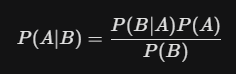
Bayesian statistics—the method of updating the probability of a hypothesis as more evidence becomes available—has seen a massive resurgence. This is due to breakthroughs in Probabilistic Programming and Markov Chain Monte Carlo (MCMC) algorithms that can now handle billions of data points.

This approach is vital for Uncertainty Quantification. In 2025, we don’t just want a single “best guess”; we want to know exactly how much we don’t know, which is essential for autonomous vehicles and high-frequency trading.


4. Edge Analytics and IoT Statistics

With billions of “smart” devices (IoT) generating data every second, we can no longer send all that information to a central server.2 Edge Analytics involves running statistical models directly on the device—the “edge” of the network.

Statisticians are developing “lightweight” models that can detect a failing factory machine or a heart arrhythmia in real-time, using minimal battery power and processing strength.


5. High-Dimensional and Non-Stationary Time Series

In the era of 6G networks and high-frequency finance, data moves too fast for traditional models. Researchers are focusing on Long-Range Dependence (LRD) and the Hurst Exponent ($H$) to understand “memory” in data streams. This helps predict persistent trends in climate change and prevents crashes in volatile markets where the “random walk” theory fails.


Why Statistics Matters in 2025

Statistics is the gatekeeper of truth in an age of misinformation. Whether it is verifying the results of an AI model, auditing an election, or tracking the success of a climate initiative, statistical rigor is what separates a “guess” from a “fact.”