
The Connection Crisis: Modern Challenges in Communication Studies

In an era of hyper-connectivity, why is it harder than ever to truly be heard? From the rise of “AI-driven Narrative Manipulation” to the “Affinity Distance” of hybrid work, explore the 2025 barriers to effective human connection on WebRef.org.

Welcome back to the WebRef.org blog. We have explored the physical laws of optics and the logical foundations of classical mechanics. Today, we turn our attention inward to the invisible threads that bind us together: Communication Studies.

As we close out 2025, the academic and professional study of communication is facing a “perfect storm.” While our technology is faster than ever, our human ability to find common ground is under siege by new, complex obstacles.


1. The Siege of Narrative Intelligence: AI and Disinformation

In 2025, the biggest challenge in communication isn’t “noise”—it is the deliberate manipulation of narrative. * The AI Multiplier: Malicious actors now use AI “agents” to automate entire narrative attack campaigns. These bots don’t just post spam; they spin out high-quality, culturally specific articles and deepfakes that cross linguistic boundaries in seconds.

  • Specialized Verification: The challenge for communicators today is that AI manipulations have become so realistic that experts now require specialized “Narrative Intelligence” tools just to verify if a voice or video is authentic. We are entering an era where “seeing is no longer believing.”


2. Affective Polarization and “Partisan Sorting”

Communication scholars are currently focused on a phenomenon called Affective Polarization—the tendency of individuals to not just disagree with their opponents, but to loathe and “other” them.

Research from 2025 suggests that digital media has created a “Partisan Sorting” effect. Contrary to popular belief, social media doesn’t just isolate us in echo chambers; it forces us to interact with the “other side” in a way that feels like a political war. This nonlocal interaction strips away the common ground we once found in our physical neighborhoods, replacing local pluralism with a binary “us vs. them” mindset.


3. The Hybrid Gap: Overcoming “Affinity Distance”

In the corporate world, 52% of remote-capable employees now work in a hybrid environment. However, this has birthed a new communication challenge: Affinity Distance.

  • The Emotional Disconnect: Affinity distance is the emotional and social gap that grows when teams don’t interact in person.

  • The Loss of Tacit Knowledge: Without the “hallway conversations” of 2019, teams are losing the ability to share spontaneous ideas or learn by watching a teammate.

  • Proximity Bias: A major ethical issue in 2025 is that managers often unconsciously favor employees they see in the office, leading to “location-based favoritism” and disengagement for remote workers.

[Image showing the “Affinity Distance” gap between remote and in-office team members]


4. The Ethics of “Black Box” Internal Comms

As organizations integrate AI to manage internal communications—scheduling, feedback analysis, and even performance reviews—they are hitting a Transparency Wall.

  • The Black Box Problem: If an AI determines an employee’s “sentiment” or “productivity score” without explaining how, it destroys trust.

  • Algorithmic Bias: 2025 research has shown that AI content moderation and sentiment analysis tools often struggle with non-dominant languages or cultural slang, leading to unintentional discrimination in global organizations.


5. Media Fragmentation and the “Influencer Gatekeepers”

The “legacy media” gatekeepers of the 20th century are gone. In 2025, communications professionals must navigate a Hyper-Fragmented Landscape:

  • Substack and Podcasting: Individual influencers and podcasters now have more trust and reach than traditional network TV.

  • The Video Shift: 75% of users now prefer watching news on mobile (TikTok, YouTube) rather than reading it. This requires communicators to be “multidisciplinary,” blending PR, video production, and social listening into a single role.


Why Communication Studies Matters in 2025

Communication is the “operating system” of society. If the system is buggy—filled with misinformation, polarized by design, or fractured by distance—the society itself cannot function. By studying these challenges at WebRef.org, we aren’t just learning how to “talk”; we are learning how to rebuild the trust and clarity required for a stable future.
The “New” Classical Mechanics: 2025’s Research Frontiers

The “New” Classical Mechanics: 2025’s Research Frontiers
Far from being a “solved” field, classical mechanics is currently at the center of the most intense debates in physics. Discover how levitated nanoparticles are testing the quantum-classical boundary, how robotics is embedding physical laws into AI “inductive biases,” and the rise of the stochastic correspondence theory on WebRef.org.

Welcome back to the WebRef.org blog. We have tracked the thermodynamics of life and the unhackable links of the quantum internet. Today, we return to the foundation: Classical Mechanics. In 2025, the study of “billiard-ball” physics is undergoing a renaissance, not as a replacement for modern theories, but as the essential bridge to them.


1. Pushing the Boundary: Where Does Classical Begin?

One of the most active “issues” in 2025 is the search for the Quantum-Classical Boundary. For a century, we have assumed that small things are quantum and big things are classical. But how big?

In late 2025, researchers at the University of Tokyo achieved a milestone by performing “quantum mechanical squeezing” on a nanoparticle 100 nm in diameter. By narrowing its velocity distribution, they forced a macroscopic object to obey quantum uncertainty rules. Simultaneously, at the University of New South Wales, physicists created “Schrödinger’s cat states” in heavy antimony atoms. These experiments are forcing a total re-evaluation of classical mechanics as an “emergent” property of quantum chaos.


2. Robotics and “Inductive Biases”

In the world of AI and robotics, 2025 is the year of Inductive Biases. Modern researchers, such as Jan Peters at TU Darmstadt, are arguing that “pure” data-driven machine learning is insufficient for the real world.

The solution? Embedding Classical Mechanics directly into the code. By using physical principles—like symmetry, conservation of momentum, and contact dynamics—as “biases” that guide how a robot learns, engineers are creating systems that can learn complex motor skills (like table tennis or surgery) with 90% less data. We are moving from robots that “guess” how to move to robots that “know” the laws of physics.


3. Biomechanics: The Era of Markerless Capture

Classical kinematic analysis—the study of motion without considering its causes—is being revolutionized by 3D Markerless Motion Capture (3D-MMC).

In late 2025, the standardization of the OpenCap protocol has allowed clinicians to perform high-fidelity gait analysis using only smartphone cameras. This removes the “burden” of traditional labs and allows for real-time intraoperative solutions. In orthopedic surgery, AI is now used to simulate “fracture mechanics” in real-time, helping surgeons predict how a bone will respond to a specific plate or screw before the first incision is made.


4. Stochastic Correspondence: Quantum as Classical?

Perhaps the most controversial “issue” of the year is the Indivisible-Stochastic Correspondence framework proposed by Jacob A. Barandes.

This theory suggests that quantum systems can be fully described as “indivisible stochastic processes” unfolding according to the laws of Classical Probability. If this holds true, it means the complex mathematical tools of Hilbert spaces and wave functions might be “convenient descriptions” rather than fundamental requirements. It reimagines the quantum world as a highly specialized branch of classical statistical mechanics.


5. Solving the Many-Body Problem

Simulating the interaction of hundreds of classical particles (the Many-Body Problem) remains a massive computational bottleneck. In 2025, researchers are combining Tensor Networks—a tool from quantum physics—with classical algorithms to solve combinatorial problems in chemistry and logistics. By using “Hamiltonian dynamics” to simulate how molecules fold or how urban traffic flows, we are finding classical solutions to problems that were previously deemed “untreatable.”


Why Classical Mechanics Matters in 2025

We are realizing that classical mechanics is the “interface” through which we interact with the universe. Whether we are training an AI to understand gravity or pushing a nanoparticle to its quantum limit, we rely on the language of Newton, Lagrange, and Hamilton to make sense of the results.

The Engine of Existence: Frontiers in Thermodynamics

Thermodynamics is evolving from the study of steam engines to the fundamental logic of life and information. Explore how 2025 breakthroughs in “Quantum Heat Engines” are defying Carnot’s limits, the role of “Infodynamics” in AI, and the thermodynamic foundations of self-replicating life on WebRef.org.

Welcome back to the WebRef.org blog. We have peered through the latest metalenses in optics and tracked the 12,000 km quantum links of the new internet. Today, we return to a discipline that many thought was “settled” a century ago. In 2025, Thermodynamics is experiencing a radical rebirth, moving into the realms of the ultra-small, the ultra-fast, and the biological.


1. Defying Carnot: The Quantum Heat Engine

For 200 years, the Carnot Limit was the iron law of physics: no engine could be more efficient than a specific mathematical ratio based on temperature. However, in October 2025, researchers at the University of Stuttgart published a landmark paper in Science Advances that has shaken this foundation.

  • The Breakthrough: By using Quantum Correlations—special bonds between particles at the atomic scale—scientists created a microscopic motor that converts both heat and quantum information into work.

  • The Result: These “strongly correlated” molecular motors can actually surpass the traditional Carnot efficiency limit. This isn’t a violation of the Second Law, but a refinement: at the quantum scale, the “tax” paid to entropy can be partially offset by the energy stored in quantum entanglement.


2. Infodynamics: The Thermodynamics of Information

In 2025, the boundary between “Information Theory” and “Thermodynamics” has effectively vanished, giving rise to the field of Infodynamics. This study treats information not as an abstraction, but as a physical entity with energy and entropy.

  • Landauer’s Limit in AI: As we build larger AI models, we are hitting a “thermal wall.” Every time a bit of information is erased in a chip, it must release heat ($kT \ln 2$).

  • The 2025 Solution: Researchers are developing “Reversible Computing” and “Neuromorphic Chips” that process information without erasing it, theoretically allowing for computers that generate zero waste heat. This “thermodynamic computing” is seen as the only way to scale AI without consuming the world’s entire energy supply.


3. Non-Equilibrium Thermodynamics: The Physics of Life

Traditional thermodynamics focuses on “Equilibrium”—systems that are static or dead. But life is, by definition, Non-Equilibrium. In 2025, the International Workshop on Nonequilibrium Thermodynamics (IWNET) highlighted a major shift in how we view biological reproduction.

Scientists at the University of Tokyo used a new geometric representation of thermodynamic laws to explain Self-Replication. They proved that life isn’t just a “happy accident,” but a mathematical inevitability for certain chemical systems that are driven far from equilibrium. By mapping these reactions as “hypersurfaces” in a multidimensional space, we can now predict whether a biological system will grow, shrink, or stabilize based purely on its energy flux.

[Image showing the non-equilibrium energy flow through a self-replicating biological cell]


4. Quantum Heat Dynamics and Magnetic Toggles

In March 2025, physicists demonstrated a “Quantum Heat Valve” that can be toggled by a magnetic field. By manipulating the “spin” of electrons in a nanostructure, they can turn the flow of heat on and off at the speed of light. This technology is being integrated into 2025’s newest Cryogenic Quantum Computers, allowing them to “flush” excess heat away from sensitive qubits without disturbing their delicate quantum states.


5. The “Time” of Thermodynamics

A surprising trend in late 2025 research is the study of Thermal Time. Scientists are exploring whether the “Arrow of Time” itself is a thermodynamic illusion created by our perspective on entropy. Recent experiments using “Time Crystals” as quantum controls suggest that we can effectively “pause” the increase of entropy in isolated systems, opening the door to materials that never age or degrade at the atomic level.


Why Thermodynamics Matters in 2025

We are no longer just managing heat; we are managing Complexity. Whether it is building a quantum motor to power a medical nanobot or understanding the “Infodynamics” of a neural network, the frontiers of thermodynamics are where we are learning the “operating manual” for reality itself.

The Violent and Vibrant Cosmos: 2025’s Final Frontiers

From the “ghostly” flyby of the interstellar visitor 3I/ATLAS to the shattering of the Hubble Tension by James Webb and Hubble, 2025 has redefined our map of the universe. Explore the discovery of “Quipu”—the largest structure ever found—and the hunt for life on the water-world K2-18b on WebRef.org.

Welcome back to the WebRef.org blog. We have tracked the shifting tides of politics and the subatomic ripples of quantum mechanics. Today, we turn our gaze to the grandest scale of all. As we close out December 2025, the field of Astrophysics and Cosmology is reeling from a series of data releases that have both solved long-standing mysteries and challenged the very foundations of the Standard Model of the Universe.


1. The Interstellar Guest: Comet 3I/ATLAS

The defining celestial event of late 2025 was the closest approach of 3I/ATLAS, only the third interstellar object ever detected passing through our solar system. On December 19, 2025, it zipped within 1.8 AU of Earth, giving astronomers a once-in-a-decade look at matter from another star system.

  • Chemical Oddities: Observations from the James Webb Space Telescope (JWST) and the Very Large Telescope in Chile revealed a “strange recipe.” Unlike solar system comets, 3I/ATLAS contains nickel but almost no iron, and it has an unusually high concentration of carbon dioxide relative to water vapor.

  • A Natural Traveler: While the “Breakthrough Listen” project scanned the object for technosignatures (signs of alien technology), the data confirmed it is a natural, albeit chemically unique, astrophysical body.


2. James Webb & Hubble: The “Cosmic Mismatch” Confirmed

In a landmark paper released on December 30, 2025, the team behind the JWST and Hubble Space Telescope confirmed that the “Hubble Tension” is not a measurement error—it is a reality.

For years, measurements of how fast the universe is expanding (the Hubble Constant) have disagreed depending on whether you look at the early universe or the modern universe. With new 2025 data ruling out “crowding” errors at an 8-sigma confidence level, lead researcher Adam Riess stated, “What remains is the real and exciting possibility we have misunderstood the universe.” This suggests that “New Physics”—perhaps a different form of Dark Energy—is required to explain the mismatch.


3. The Galactic Atlas: Euclid’s First Deep Field

The European Space Agency’s Euclid mission released its first major dataset in late 2025, cataloging a staggering 1.2 million galaxies in its first year.

  • The Galactic Tuning Fork: Euclid has allowed scientists to create a 3D map of the “Cosmic Web,” tracing how dark matter acts as the scaffolding for galaxy clusters.

  • Dwarf Galaxy Discovery: Euclid identified over 2,600 new dwarf galaxies, proving that these tiny, dim objects are the primary “building blocks” of larger systems like our Milky Way.


4. Milestone: 6,000 Exoplanets and the Signs of Life

In December 2025, NASA officially surpassed the 6,000 confirmed exoplanets milestone. Among the most discussed is K2-18b, a “Hycean” world.

  • The Signal: Follow-up studies this month have strengthened the detection of dimethyl sulfide (DMS) and dimethyl disulfide (DMDS) in its atmosphere. On Earth, these gases are produced primarily by marine life (algae).

  • Controversy: While the signal is strong, the scientific community remains divided on whether non-biological processes could be the cause, setting the stage for even deeper “Deep Space” investigations in 2026.


5. Gravitational Waves: The End of O4

The international LIGO-Virgo-KAGRA (LVK) collaboration concluded its fourth observing run (O4) on November 18, 2025. This two-year campaign was the most successful in history, detecting roughly 250 new candidate signals.

  • The Record Breaker: One specific event, GW231123, involved the merger of the most massive black holes to date, creating a final black hole over 225 times the mass of our Sun. This discovery challenges all current models of how massive stars live and die.


Why Astrophysics Matters in 2025

We are no longer just “looking” at the stars; we are “listening” to them through gravitational waves and “tasting” their atmospheres through spectroscopy. The discoveries of 2025—from the earliest supernova found (exploding just 730 million years after the Big Bang) to the discovery of the “Quipu” superstructure—remind us that we are still in the “Age of Discovery.”

Beyond the Glass: The Optical Revolution of 2025

The field of optics is undergoing a massive shift as we move from traditional glass lenses to “meta-surfaces” and air-core fibers. Explore the 2025 breakthroughs in solar imaging, the dawn of the hollow-core internet, and the rise of photonic AI processors on WebRef.org.

Welcome back to the WebRef.org blog. We have explored the quantum-classical divide and the hidden architecture of political power. Today, we look at the science that defines how we see—and transmit—information. As we celebrate the International Year of Quantum Science and Technology in 2025, the field of optics has delivered some of its most practical and awe-inspiring results in a generation.


1. The “Air” Internet: Hollow-Core Fiber Breakthroughs

For forty years, the speed of our global internet has been limited by the speed of light through glass. In late 2025, researchers from the University of Southampton and Microsoft Azure Fiber changed the game.

By replacing the solid glass core of traditional cables with a hollow air-core, they have reduced signal loss by 35% and increased transmission speeds by 45%. Because light travels faster through air than through silica, this technology is already being trialed for undersea cables. This “greener” fiber requires fewer amplifiers, significantly reducing the energy footprint of the global cloud.


2. “Raindrops” on the Sun: Extreme Adaptive Optics

One of the most stunning visual events of 2025 came from the Goode Solar Telescope. Using a new generation of high-order Adaptive Optics, astronomers were able to pierce through the “glare” of the Sun’s surface to see the corona in unprecedented detail.

The system revealed “coronal rain”—strands of plasma cooling and falling back to the surface—with a resolution of 63 kilometers. This is the theoretical limit of the telescope and a ten-fold increase in resolution from previous years. These observations are helping scientists solve the “Coronal Heating Problem”—why the Sun’s outer atmosphere is millions of degrees hotter than its surface.


3. Meta-Optics: The End of the Bulky Lens

2025 marked the year that Metalenses (or meta-optics) finally moved from the laboratory to industrial scale. Unlike traditional curved lenses, metalenses are flat surfaces covered in nanostructures that can manipulate light at a sub-wavelength scale.

A major milestone was reached this December with the prototyping of 127-µm meta-optical components designed for co-packaged optics in AI chips. These “perfect lenses” eliminate traditional optical aberrations like chromatic distortion, allowing high-performance cameras and sensors to be shrunk to the thickness of a human hair.


4. Photonic AI: Processing at the Speed of Light

As AI models grow larger, traditional silicon chips are struggling with the heat and energy costs of “moving” data. MIT researchers recently unveiled a Photonic Processor designed specifically for 6G wireless signal processing.

This chip uses an architecture called MAFT-ONN (Multiplicative Analog Frequency Transform Optical Neural Network) to perform deep learning computations in nanoseconds rather than microseconds. By using photons instead of electrons, these processors are 100 times faster than digital alternatives while using a fraction of the power.


5. Medical Optics: Non-Invasive Diagnostics

In the medical world, 2025 has seen a surge in Bio-Optics. Two major breakthroughs stand out:

  • Light-Based Glucose Monitoring: New sensors use infrared light to measure blood sugar through the skin with 98% accuracy, potentially ending the era of daily needle pricks for millions.

  • Proton Arc Therapy (PAT): Using precision-steered light and particle beams, clinicians in Italy delivered the first arc-based proton treatments, allowing for more accurate cancer targeting while sparing surrounding healthy tissue.


Why Optics Matters in 2025

Optics is no longer just about vision; it is about efficiency. Whether we are making the internet 45% faster by using air or making AI more sustainable by using light, the innovations of this year show that “the optical advantage” is the key to solving the scaling limits of the 21st century.

The Quantum Century: 2025’s Most Groundbreaking Events

2025 has been officially designated as the International Year of Quantum Science and Technology. A century after the birth of the field, we are witnessing the transition from theoretical “spooky” physics to a practical “Quantum Industry.” Explore the 2025 Nobel Prize, the rise of the Willow chip, and the dawn of the Quantum Internet on WebRef.org.

Welcome back to the WebRef.org blog. We have spent the year exploring the foundations of science, but today we look at the headlines being written right now. As we close out December 2025, the world of Quantum Mechanics has reached a “critical mass” of discovery. It is no longer a science of the future; it is the science of the present.


1. The 2025 Nobel Prize: Bridging the Quantum-Classical Divide

The 2025 Nobel Prize in Physics was awarded to a trio of pioneers—John Clarke, Michel Devoret, and Robert Martinis—for their experimental proof of Macroscopic Quantum Tunneling.

Historically, quantum effects like “tunneling” (particles passing through solid barriers) were thought to happen only at the scale of single atoms. These laureates proved that in superconducting circuits, billions of electrons can act in unison, allowing an entire “large” electrical circuit to behave like a single quantum particle. This discovery is the literal foundation of the superconducting qubits used in today’s most powerful computers.


2. The Rise of “Willow”: Google’s 2025 Quantum Milestone

The biggest hardware story of the year was the unveiling of the Willow Quantum Chip. In late 2024 and throughout 2025, Willow demonstrated what researchers call “exponential error reduction.”

  • The Achievement: For decades, the biggest problem in quantum computing was “noise”—tiny vibrations or heat that destroyed quantum data. Willow is the first chip where adding more qubits actually reduced the error rate.

  • The Speed: In a landmark test this year, Willow solved a complex molecular simulation in under five minutes—a task that would have taken the world’s fastest classical supercomputer, Frontier, over 10,000 years to complete.


3. The First Intercontinental Quantum Internet Link

In early 2025, a historic event occurred in global communication: the first successful Quantum Key Distribution (QKD) via satellite between ground stations in South Africa and China.

Using the Jinan-1 satellite, scientists sent “entangled” photons over a distance of more than 12,000 kilometers. Because of the laws of quantum mechanics, any attempt to “hack” or observe this transmission would have instantly collapsed the quantum state, alerting the users. This marks the beginning of a truly unhackable global “Quantum Internet.”


4. Quantum Sensing: Finding the “Invisible”

Quantum mechanics isn’t just for computers; it’s for seeing the world. In 2025, Quantum Sensors have moved into the field:

  • The SQUIRE Mission: A satellite launched this year uses quantum sensors to map the Earth’s gravity with such precision that it can detect underground water changes and volcanic magma movements weeks before traditional sensors.

  • Navigation Without GPS: In December 2025, the first “Quantum Compass” was successfully tested on a commercial ship. By using cold-atom interferometry, the ship was able to navigate the Arctic with pinpoint accuracy without a single satellite signal—a major breakthrough for security and autonomous transport.


5. Seeing “Schrödinger’s Cat” in Real Time

Perhaps the most visually stunning news of late 2025 came from researchers who managed to create “Schrödinger’s Cat states” in heavy atoms. By placing a large atom into a superposition of two different energy states simultaneously, they were able to observe the precise moment when the “quantumness” fades into the “classical” world we see. This is helping physicists understand why the world looks “solid” and “singular” even though its building blocks are “fuzzy” and “multiple.”


Why It Matters Today

We are currently living through a “Quantum Revolution” comparable to the Digital Revolution of the 1970s. The breakthroughs of 2025 are not just academic curiosities; they are the tools that will design the next generation of medicines, create unhackable banks, and help us understand the 95% of the universe we currently call “Dark Matter.”

The Next Wave: What’s New in Electromagnetism

From “Perfect Lenses” that defy the laws of optics to the birth of “Wireless Power Webs,” electromagnetism is entering a new frontier. Discover how researchers in 2025 are manipulating light and fields at the atomic scale to revolutionize computing and energy on WebRef.org.

Welcome back to the WebRef.org blog. We have explored the classic “Maxwellian” world of wires and magnets. Today, we leap into the cutting edge. In 2025, electromagnetism isn’t just about moving electrons through copper; it’s about sculpting electromagnetic fields with surgical precision to achieve things once thought physically impossible.


1. Metamaterials and “Negative Refraction”

The most significant breakthrough in recent years involves Metamaterials—human-made structures engineered at the nanoscale to have properties not found in nature. Specifically, researchers have perfected materials with a Negative Refractive Index.

Traditionally, light always bends toward the normal when entering a denser medium. In these new materials, light bends in the “wrong” direction. This has led to the development of Superlenses, which can image objects smaller than the wavelength of light itself, bypassing the “diffraction limit” that has constrained microscopy for centuries.


2. Terahertz (THz) Communication and 6G

As we push past 5G, the focus of electromagnetism has shifted to the Terahertz Gap. This is a band of the electromagnetic spectrum sitting between microwave and infrared frequencies.

In late 2024 and throughout 2025, new Graphene-based Antennas have allowed us to finally harness these frequencies. The result? 6G technology that can transmit data at speeds of up to 1 Terabit per second. This isn’t just for faster movies; it enables “Holographic Communication” and real-time remote robotic surgery with zero perceptible lag.


3. Room-Temperature Magnetism in 2D Materials

For decades, maintaining strong magnetic properties in ultra-thin materials required extreme cold. However, a major 2025 milestone was the stabilization of Ferromagnetism in Van der Waals materials at room temperature.

By layering atom-thick sheets of materials like chromium telluride, engineers are creating “Spintronic” devices. Unlike traditional electronics that move charge, Spintronics uses the “spin” of the electron to process information. This leads to computers that generate almost no heat and never lose data when the power is turned off.


4. Resonant Inductive Coupling: The “Power Web”

The dream of Nikola Tesla—wireless power—is seeing a commercial resurgence. Modern Dynamic Wireless Charging (DWC) uses highly tuned resonant magnetic fields to transfer energy over several meters with over 90% efficiency.

In 2025, pilot programs in “Smart Cities” are embedding these coils under roadways. This allows electric vehicles (EVs) to charge while driving, potentially eliminating the need for massive, heavy batteries and long charging stops.


5. Magneto-Electric Coupling for Brain-Machine Interfaces

A new subfield called Magneto-Electric Nano-Electrics (MENs) is changing healthcare. Researchers have developed nanoparticles that can be injected into the bloodstream and guided by external magnetic fields to the brain.

Once there, they convert external magnetic pulses into local electric signals, allowing for “non-invasive” deep brain stimulation. This is being used in 2025 to treat Parkinson’s and severe depression without the need for surgery or implanted electrodes.


Why It Matters

Electromagnetism is the “master force” of our technological civilization. By moving from the “Macro” (big coils and wires) to the “Nano” (atomic-scale fields), we are making technology faster, greener, and more deeply integrated into the human experience.

The Changing Face of Power: Current Trends in Political Science

From the rise of “Digital Authoritarianism” to the “Green Realism” of climate diplomacy, discover how political science is evolving in 2025 to meet the challenges of a multipolar and high-tech world on WebRef.org.

Welcome back to the WebRef.org blog. We have analyzed the core foundations of power and the “Social Contract.” Today, we look at the cutting-edge research and real-world shifts defining the discipline in 2025. As technology, climate, and global alliances shift, political scientists are developing new frameworks to understand how power is being “reimagined” in an era of crisis.


1. Digital Authoritarianism and AI Sovereignty

In 2025, the study of “Digital Authoritarianism” has moved from the fringes to the center of Political Science. This research explores how regimes use artificial intelligence, facial recognition, and biometric data (like India’s Aadhaar or Europe’s new surveillance laws) to monitor dissent and consolidate executive power.

A major shift occurred at the 2025 Paris AI Summit, where the academic focus pivoted from “AI Ethics” to “AI Sovereignty.” Nations are no longer just asking if AI is “fair”; they are competing for market dominance and the ability to set global regulatory standards. This has created a new “authoritarian playbook” where digital tools are used for ideological legitimation and “digital clientelism”—delivering state services directly through apps to bypass local political rivals.


2. The Rise of Affective Polarization

While traditional polarization was about policy disagreements, the 2025 research trend is Affective Polarization. This is the phenomenon where citizens don’t just disagree with the “other side”—they actively dislike and distrust them based on identity.

Scholars are using high-dimensional data and experiments to see how “moral convictions” and media echo chambers turn political opponents into existential threats. This trend is a key driver of Democratic Backsliding, as voters may be willing to forgive a leader’s undemocratic actions if that leader promises to protect their identity from the “enemy” party.


3. “Green Realism” and the Climate Backlash

The intersection of Environmental Policy and International Relations has produced a new trend: Green Realism. In 2025, climate policy is no longer seen just as a matter of “global cooperation” but as a matter of National Security.

Researchers are studying the “Green Backlash”—how rising insurance costs, land-use conflicts for renewable energy, and “stranded assets” (oil and gas) create fertile ground for populist movements. This subfield explores the “distributional consequences” of going green, identifying who wins and who loses in a post-petroleum world.


4. Democratic Backsliding and Hybrid Regimes

A defining trend of 2025 is the study of Incremental Erosion. Unlike the coups of the 20th century, modern democracy often dies “one law at a time.” Political scientists are tracking how leaders use “executive aggrandizement”—slowly stripping away the power of courts, media, and election officials while maintaining the appearance of democracy.

Recent studies published in late 2025 highlight the “Strategy of Increasing Severity,” where leaders start with mild transgressions to test the public’s “alertness” before moving to more severe power grabs.


Why These Trends Matter in 2025

Political science is evolving because the world is moving faster than our old models can handle. Whether it is the entry of “techno-magnates” into formal governance or the use of quantum computing in policy modeling, the discipline is becoming more interdisciplinary, blending psychology, data science, and environmental studies.

By staying updated on these trends at WebRef.org, you aren’t just watching the news—you are learning to see the “hidden architecture” of the world as it is being rebuilt.

The Data Revolution: Current Topics in Statistics

The field of statistics is undergoing its most significant transformation in decades. From the shift toward “Causal Inference” to the rise of “Synthetic Data” and real-time “Edge Analytics,” discover how modern statisticians are turning the noise of Big Data into the signal of truth on WebRef.org.

Welcome back to the WebRef.org blog. We have decoded the power structures of political science and the massive engines of macroeconomics. Today, we look at the mathematical “glue” that holds all these disciplines together: Statistics.

In 2025, statistics is no longer just about calculating averages or drawing pie charts. It has become a high-stakes, computational science focused on high-dimensional data, automated decision-making, and the ethical pursuit of privacy. Here are the defining topics in the field today.


1. Causal Inference: Moving Beyond Correlation

The old mantra “correlation does not imply causation” is finally getting a formal solution. Causal Inference is now a core pillar of statistics, using tools like Directed Acyclic Graphs (DAGs) and the Potential Outcomes Framework to determine why things happen, rather than just noting that two things happen together.

This is critical in medicine and public policy where randomized controlled trials (the gold standard) aren’t always possible. By using structural equation modeling, statisticians can “control” for variables after the fact to find the true impact of a new drug or a tax change.


2. Synthetic Data and Privacy-Preserving Analytics

As data privacy laws become stricter globally, statisticians have turned to a brilliant workaround: Synthetic Data. Instead of using real customer records, algorithms generate a completely fake dataset that has the exact same statistical properties as the original.

This allows researchers to study patterns—like disease spread or financial fraud—without ever seeing a single piece of private, identifiable information. This often goes hand-in-hand with Differential Privacy, a mathematical technique that adds a calculated amount of “noise” to data to mask individual identities while preserving the overall trend.


3. Bayesian Computation at Scale

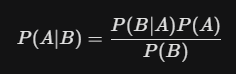
Bayesian statistics—the method of updating the probability of a hypothesis as more evidence becomes available—has seen a massive resurgence. This is due to breakthroughs in Probabilistic Programming and Markov Chain Monte Carlo (MCMC) algorithms that can now handle billions of data points.

This approach is vital for Uncertainty Quantification. In 2025, we don’t just want a single “best guess”; we want to know exactly how much we don’t know, which is essential for autonomous vehicles and high-frequency trading.


4. Edge Analytics and IoT Statistics

With billions of “smart” devices (IoT) generating data every second, we can no longer send all that information to a central server.2 Edge Analytics involves running statistical models directly on the device—the “edge” of the network.

Statisticians are developing “lightweight” models that can detect a failing factory machine or a heart arrhythmia in real-time, using minimal battery power and processing strength.


5. High-Dimensional and Non-Stationary Time Series

In the era of 6G networks and high-frequency finance, data moves too fast for traditional models. Researchers are focusing on Long-Range Dependence (LRD) and the Hurst Exponent ($H$) to understand “memory” in data streams. This helps predict persistent trends in climate change and prevents crashes in volatile markets where the “random walk” theory fails.


Why Statistics Matters in 2025

Statistics is the gatekeeper of truth in an age of misinformation. Whether it is verifying the results of an AI model, auditing an election, or tracking the success of a climate initiative, statistical rigor is what separates a “guess” from a “fact.”

The Ghost of the Atom: An Introduction to Neutrinos

They stream through you by the trillions every second, yet you cannot feel them. Meet the “Ghost Particles” of the subatomic world and discover how they might hold the key to why the universe exists at all on WebRef.org.

Welcome back to the WebRef.org blog. We have explored the massive “Up” and “Down” quarks that build our physical world. Today, we turn to their elusive cousins in the Lepton family: Neutrinos.

Neutrinos are perhaps the most mysterious particles in the Standard Model. They have almost no mass, travel at nearly the speed of light, and have no electric charge. Because they don’t interact with the electromagnetic force, they can pass through solid lead for light-years without ever hitting an atom.


Three Flavors of Neutrinos

Just like quarks, neutrinos come in three distinct “flavors,” each paired with a corresponding charged lepton:

  1. Electron Neutrinos ($\nu_e$): Produced in the nuclear reactions that power the Sun.

  2. Muon Neutrinos ($\nu_\mu$): Created when high-energy cosmic rays hit the Earth’s atmosphere.

  3. Tau Neutrinos ($\nu_\tau$): The rarest and heaviest flavor, associated with the Tau lepton.


The Great Shape-Shifters: Neutrino Oscillations

For a long time, scientists thought neutrinos had zero mass. However, a Nobel Prize-winning discovery proved that neutrinos can change their flavor as they travel—a process called Neutrino Oscillation.

If you start with an electron neutrino from the Sun, by the time it reaches Earth, it might have transformed into a muon or tau neutrino. Because physics dictates that only particles with mass can change in this way, we now know that neutrinos do have mass, even if it is millions of times smaller than an electron.


How Do We Catch a Ghost?

Since neutrinos pass through almost everything, building a detector is a massive engineering challenge. To “catch” one, you need a huge amount of material and a place perfectly shielded from other types of radiation.

  • IceCube (Antarctica): A cubic kilometer of crystal-clear ice deep under the South Pole, fitted with thousands of sensors to detect the tiny flashes of light created when a neutrino occasionally hits an atom of ice.

  • Super-Kamiokande (Japan): A giant underground tank filled with 50,000 tons of ultra-pure water, surrounded by light detectors.


Why Neutrinos Matter in 2025

Neutrinos are the ultimate cosmic messengers. Because they travel through space without being stopped by dust or gas, they allow us to see into environments that are otherwise hidden:

  1. The Heart of the Sun: Neutrinos reach us just 8 minutes after being created in the Sun’s core, giving us a “live” look at nuclear fusion.

  2. Supernova Early Warning: When a star explodes, neutrinos are released before the light. By detecting the neutrino burst, astronomers can point their telescopes to watch the star blow up in real-time.

  3. The Matter Mystery: Scientists suspect that a difference in the behavior of neutrinos and “anti-neutrinos” might explain why the Big Bang produced more matter than antimatter, allowing the universe to exist.


Final Thought: A Trillion-Ghost Transit

As you read this sentence, roughly 100 trillion neutrinos from the Sun are passing through your body every single second. They are a constant reminder that the universe is far more crowded and complex than our human senses can ever perceive.

The Heart of the Atom: An Introduction to Quarks

Journey beneath the surface of the proton to discover the smallest known building blocks of matter. Explore the “flavors” of the subatomic world and the “Color Charge” that holds the universe together on WebRef.org.

Welcome back to the WebRef.org blog. We have explored the massive structures of the cosmos and the elegant laws of thermodynamics. Today, we dive into the deepest layers of reality to meet the most fundamental constituents of matter: Quarks.

For decades, scientists believed that protons and neutrons were the smallest parts of an atomic nucleus. However, in the 1960s, physicists discovered that these particles are actually made of even smaller entities. Quarks are elementary particles—meaning they aren’t made of anything else—and they are the primary building blocks of the visible universe.


The Six Flavors of Quarks

In a bit of scientific whimsy, physicists decided to call the different types of quarks “flavors.” There are six known flavors, organized into three “generations” based on their mass:

Generation Quarks Description
1st Generation Up & Down The lightest and most stable. These make up all normal matter (protons and neutrons).
2nd Generation Charm & Strange Heavier quarks usually only found in high-energy collisions or cosmic rays.
3rd Generation Top & Bottom The heaviest quarks; the Top quark is roughly as massive as an entire atom of Gold!

How Quarks Build Protons and Neutrons

Quarks never exist alone in nature (a phenomenon called Confinement). Instead, they group together to form composite particles called Hadrons. The two most important hadrons are:

  • The Proton: Made of two Up quarks and one Down quark ($uud$).

  • The Neutron: Made of one Up quark and two Down quarks ($udd$).

One of the strangest things about quarks is their electric charge. While protons have a $+1$ charge and electrons have a $-1$ charge, quarks have fractional charges. An Up quark has a charge of $+2/3$, while a Down quark has a charge of $-1/3$. If you do the math, they add up perfectly to the charges of the particles they create!


The Strongest Bond: Color Charge and Gluons

If quarks all have positive or negative charges, why don’t they fly apart? They are held together by the Strong Nuclear Force, the most powerful force in the universe.

In particle physics, we say quarks carry a “Color Charge” (Red, Green, or Blue). This has nothing to do with actual colors; it’s just a way to track how they interact. They are “glued” together by exchanging particles called Gluons. The bond is so strong that if you try to pull two quarks apart, the energy you use actually creates new quarks instead of freeing the old ones.


Why Quarks Matter in 2025

While quarks are unimaginably small, understanding them is the key to the biggest questions in science:

  1. The Early Universe: In the first millionths of a second after the Big Bang, the universe was a “Quark-Gluon Plasma”—a hot, dense soup of free quarks. By studying this state in accelerators, we learn how the first atoms formed.

  2. Nuclear Energy: The energy released in nuclear fission and fusion is actually a result of rearranging the bonds between quarks.

  3. Mass and the Higgs Boson: By studying how quarks interact with the Higgs field, we are learning why matter has mass at all.

  4. Neutron Stars: These dead stars are so dense that their cores might consist entirely of “strange matter”—a liquid-like state of quarks that doesn’t exist anywhere else in the cosmos.


Final Thought: A Universe of Three

It is a profound realization that every person you’ve met, every mountain you’ve climbed, and every star you’ve seen is essentially just a different arrangement of Up and Down quarks. We are, quite literally, built from the smallest ripples in the fabric of the subatomic world.

The Art of Power: An Introduction to Political Science

Welcome back to the WebRef.org blog. We have explored the laws of the universe, the mysteries of the subatomic world, and the mechanics of communication. Today, we turn our attention to how we organize ourselves as a species. We are entering the realm of Political Science.

Political Science is the social science that deals with systems of governance and the analysis of political activities, political thoughts, and political behavior. It isn’t just about “who is in charge”; it is the study of power—how it is gained, how it is used, and how it is limited.


The Pillars of Political Inquiry

Political science is a broad discipline that seeks to understand everything from the internal psychology of a voter to the global interactions of nuclear superpowers. It is generally divided into several key subfields:

1. Political Theory

The philosophical foundation of the field. This branch asks the “Big Questions”: What is justice? What is the best form of government? What are the rights of an individual versus the duties of the state? It explores the works of thinkers from Plato and Aristotle to Machiavelli, Locke, and Marx.

2. Comparative Politics

This involves the systematic study and comparison of the world’s political systems. By looking at why some countries are stable democracies while others are authoritarian regimes, political scientists identify the “variables” that lead to successful governance.

3. International Relations (IR)

The study of how sovereign states, intergovernmental organizations (like the UN), and non-state actors (like NGOs) interact on a global stage. IR scholars analyze war, trade, diplomacy, and global issues like climate change and human rights.

4. Public Policy and Administration

The “applied” side of the science. This subfield focuses on how laws are actually implemented on the ground and how government bureaucracies manage public resources to solve societal problems.


Core Concepts: The Building Blocks of the State

To think like a political scientist, you must understand these foundational concepts:

  • Sovereignty: The supreme authority of a state to govern itself without interference from outside sources.

  • Legitimacy: The popular acceptance of a government’s right to rule. A government can have power through force, but it has legitimacy when the people believe its rule is justified.

  • The Social Contract: A theoretical agreement where individuals give up some of their absolute freedom in exchange for the protection and order provided by the state.

  • Separation of Powers: The principle of dividing government authority into different branches (usually Legislative, Executive, and Judicial) to prevent any one person or group from gaining absolute power.


Why Political Science Matters in 2025

We live in a time of rapid geopolitical shifts and technological disruption. Political science provides the tools to navigate this complexity:

  1. Understanding Democracy: As many nations grapple with polarization, political scientists study how to make democratic institutions more resilient and inclusive.

  2. Global Security: In an era of cyberwarfare and shifting alliances, understanding the “Game Theory” behind international conflict is essential for maintaining peace.

  3. The Impact of AI: Political science is currently at the forefront of studying how artificial intelligence will affect elections, surveillance, and the future of work.

  4. Environmental Governance: Solving the climate crisis requires more than just “science”; it requires the political will to create international treaties and domestic regulations that people will actually follow.


Final Thought: You are a Political Actor

The most important lesson of political science is that everything is political. The price of your groceries, the quality of your internet, and the laws governing your privacy are all the results of political processes. By studying political science at WebRef.org, you aren’t just learning about history; you are learning how to be an informed and effective participant in the world around you.